BetaFPV Meteor75 Pro – a compact FPV drone for racing and freestyle
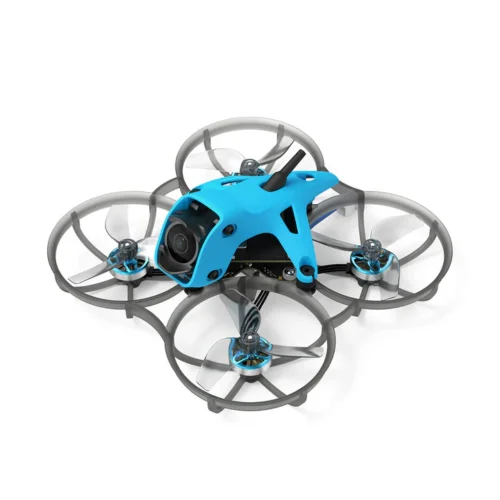
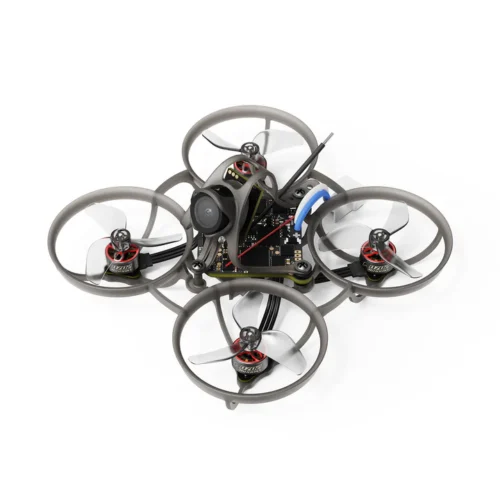
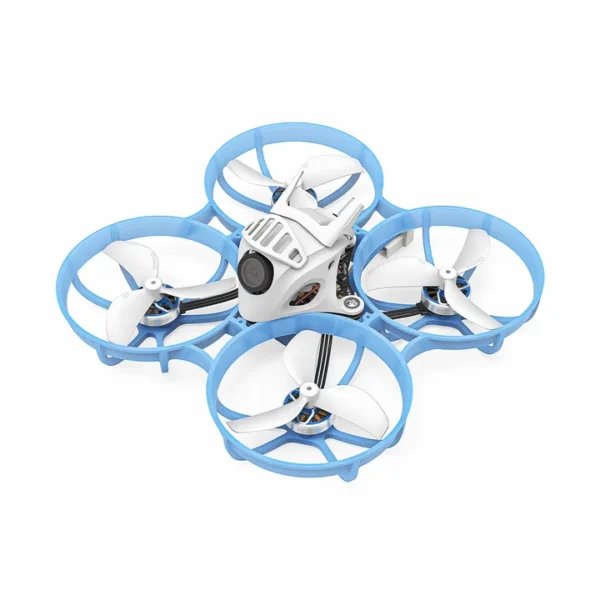
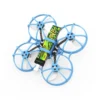
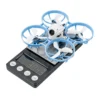
BetaFPV Meteor75 Pro is a 1S-powered whoop quadcopter designed for FPV practice, technical race courses and freestyle manoeuvres. Its guarded propellers and brushless motors combine a compact layout with performance suited to active flying. It supports both indoor and outdoor use, with flying conditions chosen to suit its small size, available manoeuvring space and wind conditions.
This version features a Matrix 1S flight controller, a BMI270 gyroscope and an integrated ExpressLRS 2.4 GHz receiver. Its analog video system suits pilots who already use compatible 5.8 GHz FPV goggles and want a compact drone for their existing equipment. Radio control and video transmission use separate systems, so compatibility needs to be checked for both when selecting a transmitter and goggles.
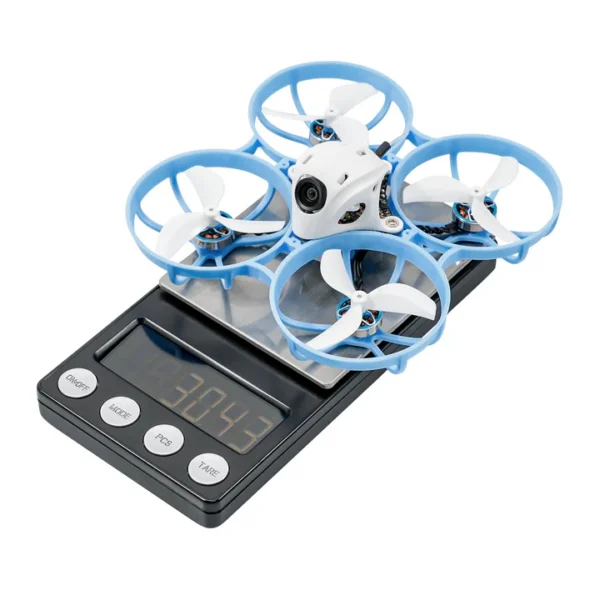
80.8 mm frame with 45 mm three-blade propellers
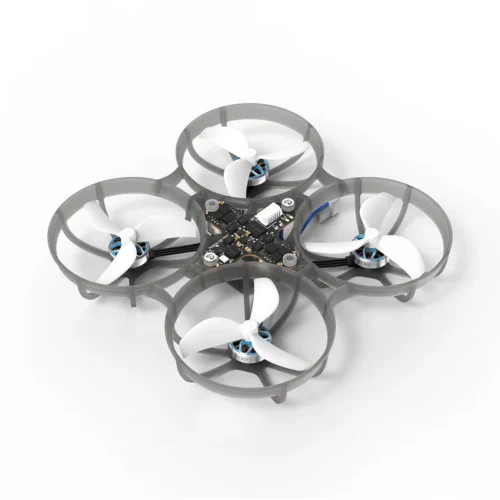
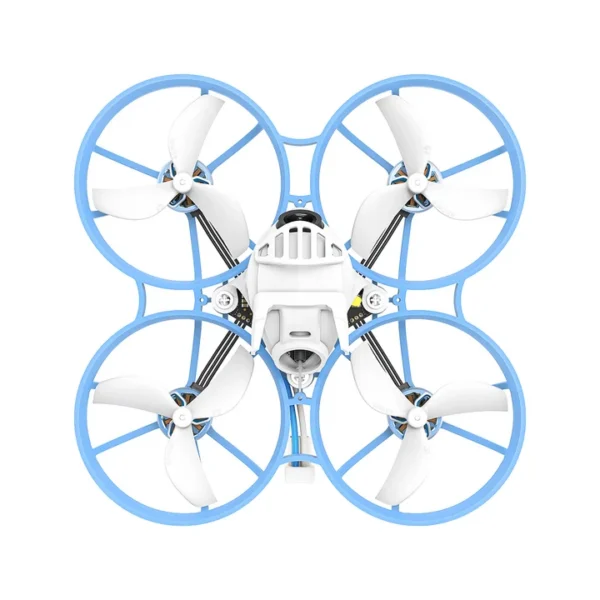
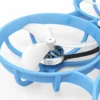
A polypropylene frame with an 80.8 mm wheelbase provides the structural foundation. Guards surrounding each propeller help reduce direct contact between spinning blades and nearby objects, while triangular bracing reinforces motor mounts. This construction is practical for regular training sessions focused on accurate flight paths, controlled turns and consistent manoeuvres.
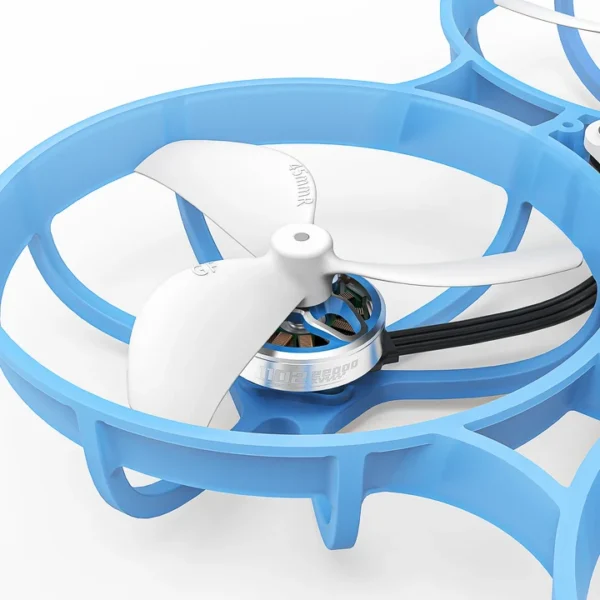
Power comes from 1102 21000KV brushless motors paired with Gemfan 45 mm three-blade propellers. Propellers use a 1.5 mm shaft fitting. Designed around a single-cell power system, this combination supports cornering, acceleration and direction changes during freestyle flights. When choosing replacements, matching propeller diameter and shaft size helps ensure compatibility with the original setup.
Matrix 1S electronics and BMI270 motion sensing
Matrix 1S combines a flight controller, electronic speed controllers, radio receiver, video transmitter and on-screen display functionality on one board. Its STM32G473CEU6 processor runs at 168 MHz, while this hardware version uses a BMI270 gyroscope. Integrated ESCs have a continuous current rating of 5 A and operate from a 1S battery supply.
A 1 mm thick circuit board and plug-in motor connections make maintenance more straightforward. A replacement motor with a matching connector can be fitted without soldering its wires to the flight controller. Betaflight OSD allows flight information to appear in your video feed, while 16 MB of Blackbox memory supports flight logging for setup analysis. Firmware updates must match the BMI270 hardware version.
C03 camera and adjustable analog video transmission
A C03 FPV camera provides 1200 TVL resolution using a 1/3-inch CMOS sensor and a 2.1 mm lens with a 160° field of view. It outputs a 4:3 NTSC analog image and weighs 1.45 g. A wide viewing angle helps pilots keep surrounding space in view during flight. Camera mounting options provide either a 20° or 30° tilt, allowing the viewing angle to suit different flying styles.
An integrated 5.8 GHz video transmitter offers 48 channels and selectable output levels of 25, 100, 200 and 400 mW. Its channel needs to match your FPV goggle receiver. Higher output increases power consumption and heat, so maximum power is not automatically the most suitable setting for every flight. A separate ExpressLRS 2.4 GHz receiver handles control commands and requires a radio transmitter equipped with compatible ExpressLRS hardware.
LAVA II batteries for regular flying sessions
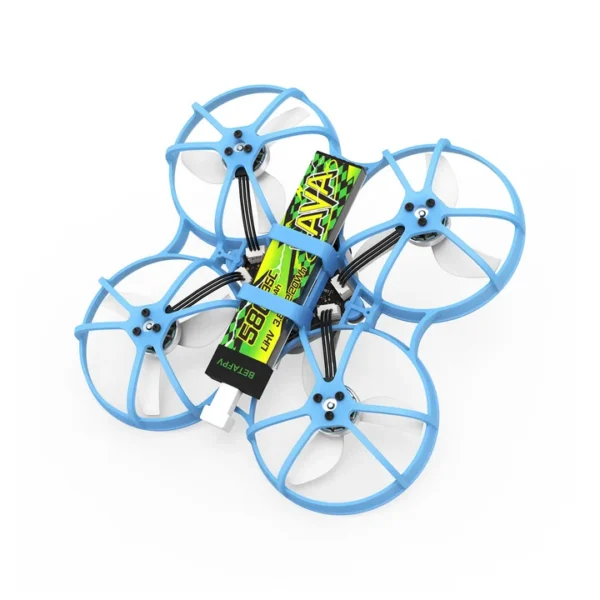
Meteor75 Pro uses a LAVA II 1S 580 mAh LiHV battery with a BT2.0 connector. Manufacturer-listed flight time is approximately 6 minutes and 30 seconds. Actual duration varies with flying style, battery condition, environmental conditions and video transmitter settings. Two included batteries let you continue practising after a battery swap. Charging requires equipment compatible with 1S LiHV batteries and BT2.0 connections.
Included equipment and what you need to fly
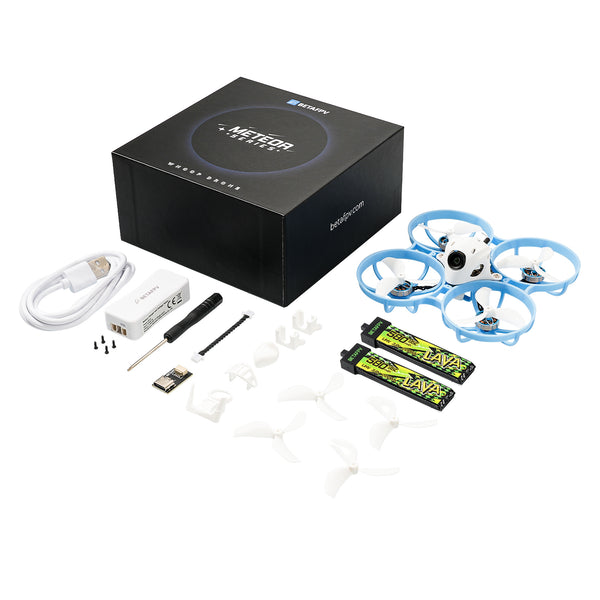
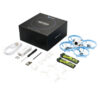
Inside the package are a Meteor75 Pro quadcopter, two LAVA II 1S 580 mAh batteries, a BT2.0 charger with voltage tester, a USB-C cable, a USB-C adapter and a four-pin adapter cable. Four spare Gemfan 45 mm three-blade propellers, a Phillips screwdriver, a screw pack and canopy accessories are also supplied. A radio transmitter and FPV goggles are purchased separately. Before your first flight, bind the ExpressLRS receiver to a compatible transmitter, match video channels and check that control inputs operate correctly.

 Parcel locker: 1–3 business days
 Parcel locker: 1–3 business days