ToolkitRC M7AC – versatile AC/DC battery charger and measuring device
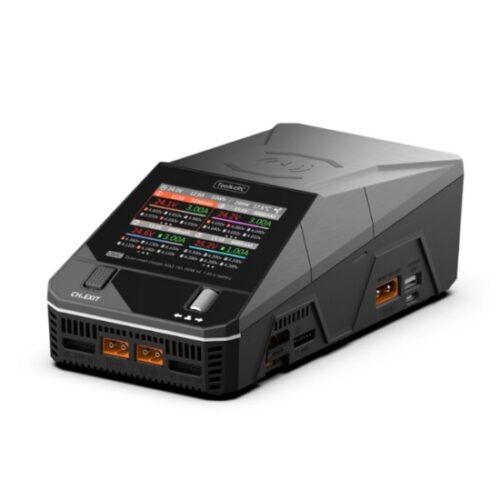
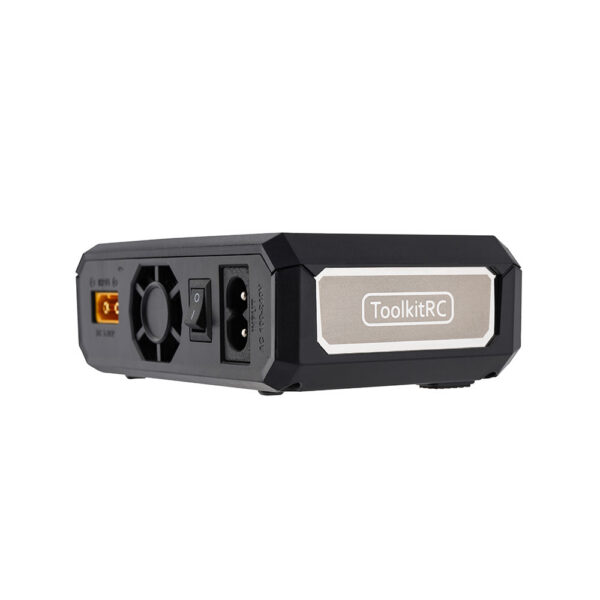
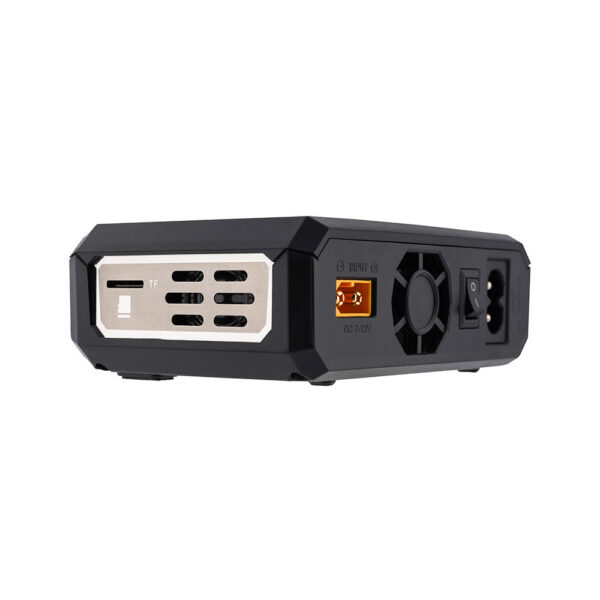
ToolkitRC M7AC is a compact battery charger that combines battery charging, balancing, discharging and measurement with an adjustable power supply and RC signal testing functions. Supporting both AC and DC power, it is suitable for maintaining batteries for FPV drones and other radio-controlled models at home, in a workshop or at a flying site.
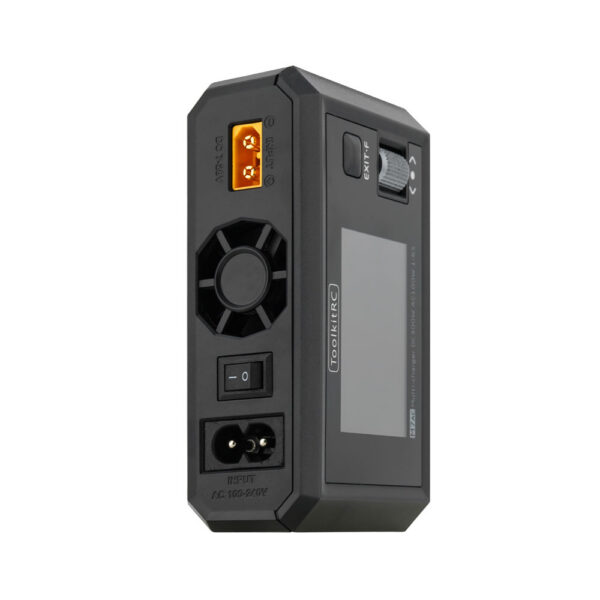
Charging power reaches up to 100 W on AC mains power and up to 300 W with a suitable external DC power source. Maximum charging current is 15 A. Built-in XT30 and XT60 connectors and a 2.4-inch IPS colour display make ToolkitRC M7AC a practical tool for users who need to check batteries and RC electronics as well as charge them.
AC and DC power for use at home and at a flying site
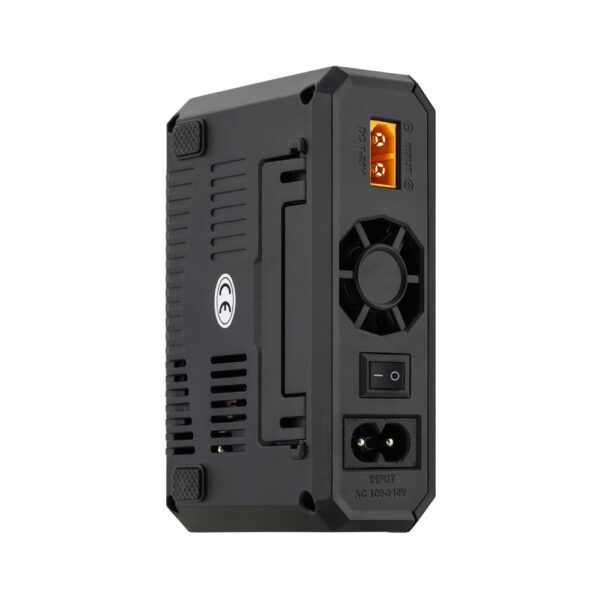
ToolkitRC M7AC supports a 100–240 V AC input, allowing it to connect directly to a suitable mains supply. Its built-in power supply provides up to 100 W of charging power without a separate external power supply.
Away from mains power, the 7–28 V DC input allows the charger to operate from a suitable supply battery or external DC power supply. On DC power, maximum charging power is up to 300 W, with an input current of up to 20 A. To achieve higher output power, the power source must be capable of supplying the required voltage and current.
Actual charging power depends on input power, battery voltage and the selected charging current. A maximum charging current of 15 A does not mean that every battery can be charged at this rate: the setting must be chosen according to the battery manufacturer’s instructions and battery capacity.
Wide battery compatibility
ToolkitRC M7AC can charge 1–6S LiPo, LiHV, LiFe, Li-ion and LTO batteries. This covers various lithium batteries used in FPV drones, RC models and other battery-powered devices. It also supports 1–16-cell NiMH batteries and 1–10-cell lead-acid batteries.
The correct charging programme must be selected for each battery chemistry, as their permitted end-of-charge voltages and charging requirements differ. Selecting the appropriate battery type, cell count and charging current allows the charger to be configured for the specific battery.
XT30 and XT60 connectors and battery balancing
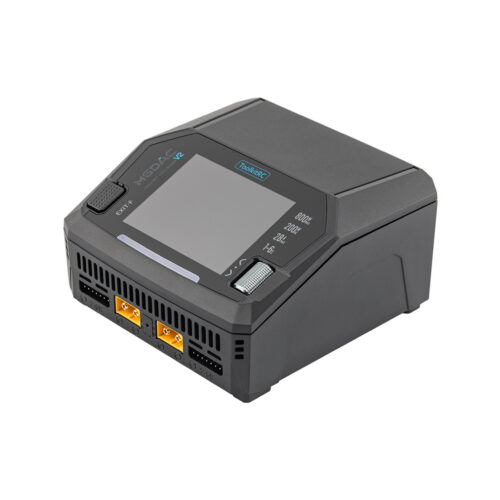
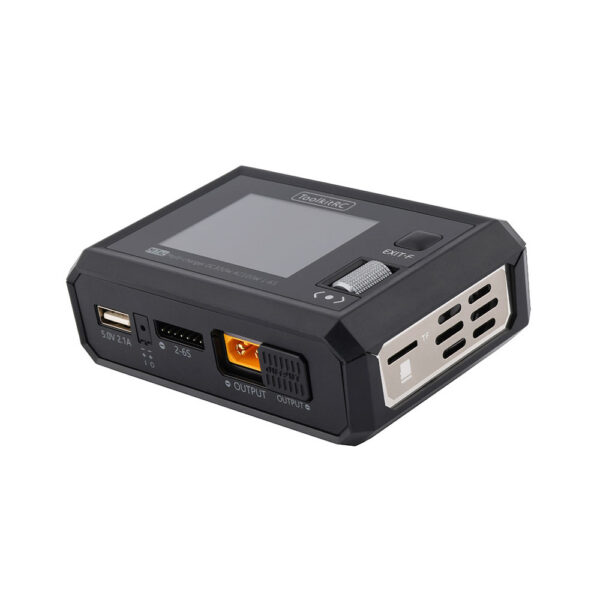
The charger features built-in XT30 and XT60 output connectors, allowing batteries with matching connectors to be connected without an XT30–XT60 adapter. This is convenient when using batteries for both smaller micro drones and larger FPV models. The two connectors provide a choice of connections, rather than two independent charging channels.
Balancing cell voltages is an important part of maintaining multi-cell lithium batteries. According to the manufacturer, ToolkitRC M7AC provides a balancing current of up to 800 mA at a cell voltage of 4.2 V. Through the balance connection, the charger can monitor individual cell voltages and reduce differences between them during charging.
Discharging and regenerative discharge
In addition to charging, ToolkitRC M7AC supports battery discharging. In standard discharge mode, power reaches up to 15 W, with a current of up to 3 A. This allows battery energy to be reduced in a controlled manner within the charger’s settings.
In regenerative discharge mode, power reaches up to 300 W, with a current of up to 15 A. This mode feeds energy back into a suitable input battery. To use this function, the input battery must be able to accept the returned energy, and its charging limits must be observed. Regenerative discharge is not intended to feed energy back into a standard mains power adapter.
Battery voltage and internal resistance measurement
ToolkitRC M7AC helps assess battery condition by measuring cell voltage and internal resistance. The voltage measurement range is 1.0–5.0 V per cell, and the function supports 1–6S batteries. Comparing individual cell readings helps identify voltage differences.
The internal resistance measurement range is 0.1–99 mΩ for 1–6S batteries. Monitoring these readings can help assess changes in battery condition over time. For comparable results, measurements should be taken at similar temperatures, states of charge and connection conditions, as these factors affect the results.
Adjustable power supply and RC signal testing
ToolkitRC M7AC can be used as an adjustable DC power supply. Output voltage can be set from 1 to 28 V, with a current limit of 0.5–15 A, subject to the power limits of both the device and its input source. Constant voltage and constant current modes, known as CV and CC, allow it to power and test compatible electronics.
The charger also supports PWM, PPM and SBUS signal measurement and generation. These functions are useful for checking signals and configuring RC equipment. This makes the same device useful for working with model electronics as well as maintaining batteries.
Colour display and compact housing
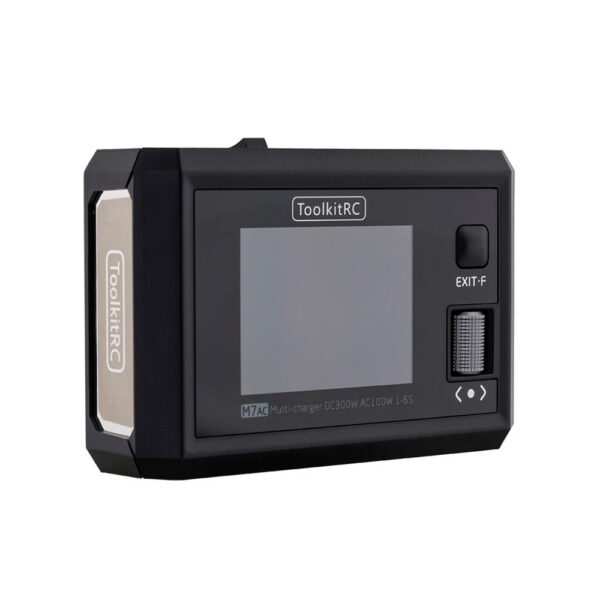
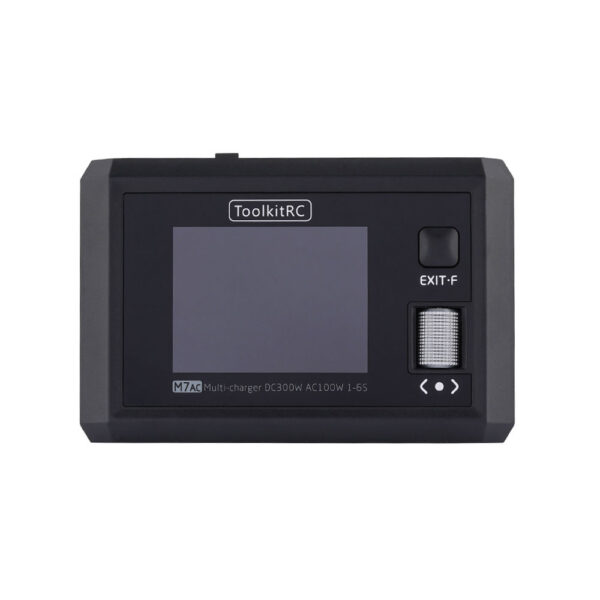
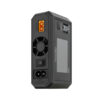
ToolkitRC M7AC features a 2.4-inch IPS display with a resolution of 320 × 240 pixels. The screen shows charging data, measurement results and selected settings.
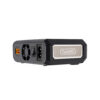
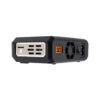
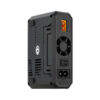
Measuring 112 × 73 × 38 mm and weighing approximately 245 g, the charger fits easily into a tool bag or alongside FPV equipment. Its USB-A port provides up to 10 W of output power at 5 V and is also used for firmware updates.
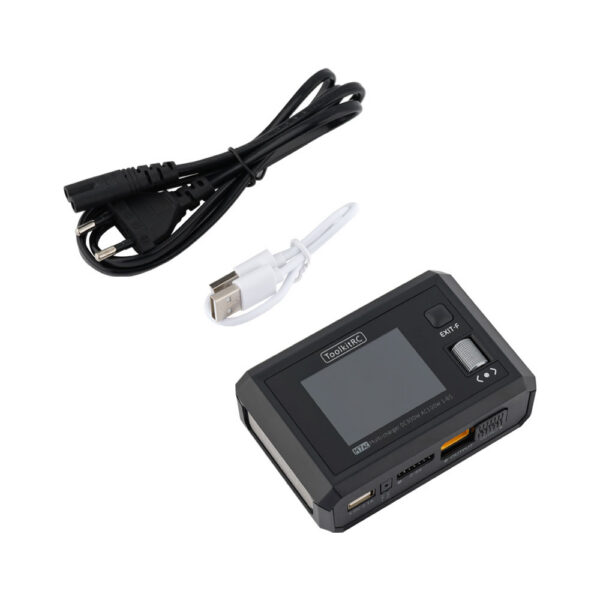
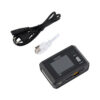
The package includes a ToolkitRC M7AC charger, an AC power cable, a USB cable, a quick start guide and a screen protector.
Explore more FPV chargers here.

 Parcel locker: 1–3 business days
 Parcel locker: 1–3 business days