Unitree R1 Protective Bracket
600.00 €
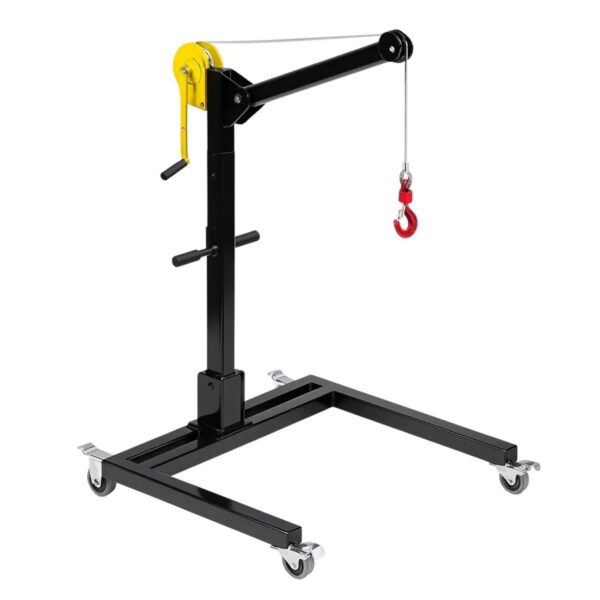
Unitree R1 Protective Bracket is a protective support frame designed for Unitree R1 humanoid robot, helping prevent falls and reduce the risk of damage during motion testing.
Frame is suitable for use during robot setup, calibration, programming, and development of walking and balance algorithms.
Unitree R1 Protective Bracket – protective frame for safer humanoid robot testing
Unitree R1 Protective Bracket is a protective support frame designed for Unitree R1 humanoid robot, helping make robot development, setup, and motion testing safer. Frame provides additional support when testing walking, balance, motion coordination, or new control algorithms. If robot loses its balance during a test, a correctly installed protection system helps reduce risk of injury and material damage caused by a fall.
Developing humanoid robot locomotion requires repeated testing during which robot behaviour may not yet be fully predictable. Unitree R1 Protective Bracket creates a more controlled testing environment, making it suitable for laboratories, educational institutions, robotics centres, and corporate research and development departments. It is a practical accessory for both initial commissioning of an R1 robot and long-term development projects.
Why is a protective frame needed for Unitree R1?
Balance of a bipedal humanoid robot depends on several systems operating simultaneously. Joint motors, position sensors, motion controllers, and software algorithms must respond in real time to keep robot upright and moving in the intended direction. When testing a new gait pattern, movement speed, or balance strategy, even a minor configuration error can result in unstable movement or a fall.
Unitree R1 Protective Bracket helps reduce risks associated with these tests. Protective frame supports robot in a critical situation and reduces likelihood of an unbalanced R1 falling onto flooring, furniture, laboratory equipment, or nearby people. This allows developers to focus on analysing movement and improving software without every unsuccessful test creating a significant risk of damage.
Protective frame is particularly useful during initial setup, calibration, post-maintenance inspections, and testing of new motion functions. It can also be used when accessories are installed on robot or its weight distribution is changed, requiring balance system to be recalibrated.
Safer development of walking and balance algorithms
Unitree R1 Protective Bracket is intended primarily for development work involving walking, standing, and balance control. Frame allows developers to test starting, stopping, turning, shifting weight from one leg to another, and gait patterns with different step lengths in a more controlled manner. It is also useful when developing robot’s ability to respond to external forces or regain balance after an unexpected movement.
A safer testing environment makes it possible to perform more repeated trials and compare different control parameters. This is important in development of machine learning and artificial intelligence solutions, as walking and balance algorithms often require extensive testing on a physical robot. Protective frame does not control robot or automatically correct algorithms, but it helps limit potential consequences of an unsuccessful test.
Unitree R1 Protective Bracket is also suitable for robot calibration. After maintenance of joint motors, sensors, or other components, robot’s movement and posture can be checked before allowing it to move freely across the floor. Incorrect parameters, inaccurate zero positions, or unexpected movement can therefore be identified in a more controlled environment.
Designed for Unitree R1 humanoid robot
Unitree R1 Protective Bracket has been developed specifically for Unitree R1 humanoid robots. It is compatible with R1 Basic and R1 EDU series configurations, including various Standard, Smart, and Pro versions. R1 EDU packages may already include a protective frame, while R1 Basic generally requires it to be purchased separately. An additional frame can also be purchased to create a second testing area or parallel development station. Exact package contents should always be checked before ordering, as they may vary depending on R1 configuration and sales package.
R1 platform measures approximately 1230 mm in height when standing, while Basic and EDU versions weigh around 29 kg with battery installed. A fall involving a humanoid robot of this size and weight can damage both robot and nearby equipment. Depending on configuration, R1 motion system may use between 26 and 40 joints, meaning robot balance and movement result from numerous interconnected components working together. A support frame designed specifically for R1 is therefore much more suitable for a development environment than an improvised mounting solution.
Suitable for education, research, and development
Unitree R1 Protective Bracket is a valuable accessory for universities, vocational schools, robotics laboratories, research institutions, and technology companies. In education, it can be used to demonstrate humanoid robot motion control and conduct practical programming experiments under more controlled conditions. Students can observe how changes in control parameters affect robot balance, gait, and responses.
In research and development, protective frame can support testing of motion control, artificial intelligence, autonomous behaviour, human-robot collaboration, and various machine learning methods. It is also suitable for robot demonstrations where software under development has not yet been fully validated or where presentation includes new and previously untested movements.
In corporate environments, a dedicated protective frame can make testing processes more systematic. A permanent development area can be created around it for setting up, inspecting, and programming robot before carrying out tests that require unrestricted movement. Where several development teams or laboratories are involved, an additional frame can reduce need to move a single safety system between different workstations.
Protection for robot, people, and testing environment
Purpose of a humanoid robot protective frame is not limited to protecting robot body. A robot losing its balance may also damage flooring, furniture, computers, measuring instruments, and other nearby objects. Unitree R1 Protective Bracket helps limit an uncontrolled fall and creates a more clearly defined testing area.
Use of a protective frame does not eliminate every risk associated with operating a humanoid robot. R1 has powerful joint motors and moving components, so a safe distance must be maintained and people should remain outside robot’s movement area. Frame must be installed on a stable surface, secured according to instructions, and inspected before every test. It must not be treated as equipment for lifting people or as a universal hoist, as it is an accessory designed specifically for testing and protecting Unitree R1.
For best results, protection system should be configured so that it does not unnecessarily restrict robot’s natural movement while still being able to support it if balance is lost. Suitable setup depends on movement being tested, robot configuration, and development method being used.
A practical accessory for Unitree R1 developers
Unitree R1 Protective Bracket is an essential accessory for users developing, programming, calibrating, or maintaining Unitree R1 humanoid robot. It helps users conduct walking, balance, and motion tests in a more controlled environment while reducing risk of damage caused by robot falling.
Protective frame is compatible with Unitree R1 Basic and R1 EDU series robots and is particularly useful during commissioning, algorithm development, AI training, and laboratory testing. Unitree R1 Protective Bracket does not replace compliance with safety requirements or human supervision, but it helps make humanoid robot development safer, more systematic, and more efficient.
View our range of robots here.