Unitree R1 Battery
900.00 €
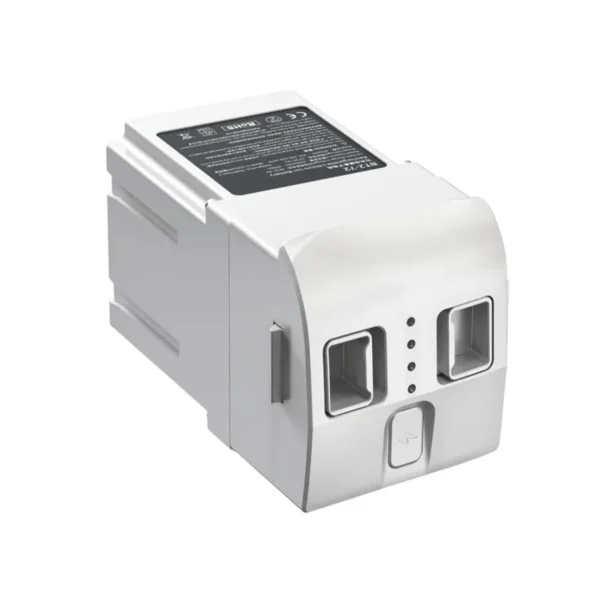
Unitree R1 Battery is a removable 6000 mAh, 199 Wh smart battery designed for Unitree R1 humanoid robot, with a nominal voltage of 33.12 V.
An integrated BMS, multi-level protection system, and high-strength engineering plastic housing provide reliable power and allow robot to operate for approximately one hour.
Unitree R1 Battery – removable smart battery for Unitree R1 humanoid robot
Unitree R1 Battery is a high-performance removable smart battery designed for Unitree R1 humanoid robot. It provides a stable power supply for robot joint motors, control systems, sensors, and computing platform. Battery has a nominal voltage of 33.12 V, a capacity of 6000 mAh, and an energy rating of 199 Wh. An integrated battery management system, or BMS, monitors charging, discharging, and battery operating conditions, helping ensure reliable use in education, research and development projects, and technology demonstrations.
A removable quick-release design allows a depleted battery to be replaced with a charged spare when a suitable workflow is followed. An additional Unitree R1 Battery is therefore a practical accessory for laboratories, educational institutions, and development teams looking to reduce charging-related waiting time and keep a humanoid robot available throughout a longer working day.
6000 mAh capacity and 199 Wh energy rating
Unitree R1 Battery combines a capacity of 6000 mAh, a nominal voltage of 33.12 V, and an energy rating of 199 Wh. These specifications are designed for Unitree R1 platform, where a battery must power several demanding systems simultaneously. Robot joint motors, balance control, cameras, communication systems, and computing modules operate at the same time, while energy consumption can change rapidly depending on task.
According to Unitree, a Unitree R1 humanoid robot typically operates for approximately one hour on a single battery. Actual runtime depends on robot model and configuration, movement speed, load, accessories, computing power usage, ambient temperature, and nature of work being performed. Intensive walking, dynamic movements, and computationally demanding AI applications may discharge battery more quickly than standing, programming, or lower-intensity demonstrations.
An approximate one-hour runtime should therefore not be considered a guaranteed value in every situation. It is a reference figure that can be used to plan experiments, lessons, and demonstrations.
Quick-release battery for a smoother workflow
Unitree R1 Battery uses a removable quick-release design that simplifies battery replacement. When one battery is depleted, it can be removed and replaced with a charged spare by following Unitree instructions for shutting down robot and handling battery. Depleted battery can then be charged separately.
A spare battery is particularly useful in robotics laboratories and development centres where experiments continue throughout a full working day or several teams use one robot in succession. It reduces situations where programming, calibration, or motion algorithm testing must be interrupted solely for charging.
In educational institutions, an additional Unitree R1 Battery makes it easier to schedule consecutive practical sessions, demonstrations, and student projects. At exhibitions and technology events, a spare battery helps prepare robot for its next presentation while previous battery is charging. Battery replacement does not provide uninterrupted power and must not be treated as hot-swapping while robot is operating. Battery must be replaced according to procedure specified by Unitree.
Integrated BMS battery management system
Unitree R1 Battery uses a battery management system developed by Unitree to monitor battery condition and control charging and discharging processes. BMS helps keep cell operating parameters within an appropriate range while reducing risks associated with electrical faults, incorrect charging, and uneven cell loading.
Its multi-level protection system includes load detection, cell balancing, overcharge protection, charging temperature monitoring, charging current protection, short-circuit protection, and excessive discharge protection. These functions operate automatically as part of internal battery management, but they do not replace correct handling, a compatible charger, or regular visual inspection.
Balanced charging helps keep voltage levels of individual cells as even as possible. Temperature and current protection help limit charging under unsuitable conditions, while overcharge and excessive discharge protection reduce risk of battery damage. Short-circuit protection is important if battery contacts or an electrical circuit become directly connected because of a fault.
High-strength engineering plastic housing
Cells inside Unitree R1 Battery are enclosed in a high-strength engineering plastic housing. This housing helps protect internal components during everyday use, transport, and accidental impacts. Unitree has also considered situations where a removable battery may be dropped during handling, although a robust housing does not make it indestructible.
Battery measures approximately 93.9 × 90.3 × 159 mm. Its compact shape is designed for R1 battery compartment and allows battery to be installed without external cables or universal mounting solutions. A dedicated housing and connection interface help secure battery in its intended position.
If battery housing is cracked, heavily dented, deformed, or unusually hot, use and charging must be discontinued. Battery should also be taken out of service if it releases an unusual smell, liquid, or smoke. A damaged lithium battery must not be opened or repaired by user.
Compatibility with Unitree R1 models
Unitree R1 Battery has been developed for Unitree R1 humanoid robot series. R1 platform includes R1 AIR, R1, and development-oriented R1 EDU models, all of which are listed in official specifications with a removable smart battery. Exact robot version, battery shape, colour, connection, and software compatibility should still be verified before purchase.
Unitree offers R1 Battery in different colour options, including white and red. A suitable version should be selected according to robot body colour and specific sales package.
Battery must not be used to power other Unitree robots or third-party devices, even if its physical shape or contacts appear compatible. Different robots may use a different nominal voltage, connector, charging protocol, or battery management system.
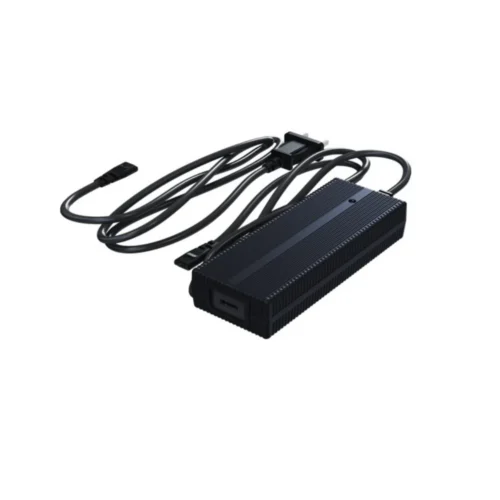
Charging with Unitree R1 Charger
Unitree R1 Battery must be charged using Unitree R1 Charger designed for R1 platform and in accordance with Unitree instructions. Manufacturer specifications list a charging current of 5.5 A, while actual charging is managed by battery BMS and robot charging system according to temperature, state of charge, and battery condition.
Battery housing, contacts, charger, and cables should be inspected before charging. Battery must be dry and its temperature must remain within range permitted by manufacturer. After intensive use, a hot battery should be allowed to cool before charging. During charging, battery must be placed on a stable and well-ventilated surface away from direct sunlight, heat sources, and flammable materials.
An incompatible charger may use incorrect voltage, current, or control logic and damage battery. Universal chargers, homemade adapters, and power supplies of unknown origin are therefore not recommended.
Battery storage and transport
When Unitree R1 Battery will not be used for an extended period, it should be stored in a dry, cool, and well-ventilated location. Battery should not be exposed to excessive heat, cold, moisture, or direct sunlight. Metal objects must also be prevented from contacting battery terminals and causing a short circuit.
During long-term storage, battery charge level should be checked periodically and Unitree maintenance and charging instructions should be followed. Leaving a lithium battery fully discharged for an extended period can impair its performance.
Unitree R1 Battery has an energy rating of 199 Wh and, according to Unitree, complies with IEC 62133-2 and UN38.3 standards. UN38.3 compliance indicates that battery has passed testing related to lithium battery transport, but it does not automatically mean it can be carried in passenger baggage without restrictions. Airline, courier, destination-country, and dangerous goods transport requirements must be followed for air, courier, and international shipping.
Why choose a spare battery for R1 robot?
An additional Unitree R1 Battery makes it possible to divide a working day into several operating and charging cycles. While one battery is installed in robot, another can be prepared or charged. This workflow is well suited to development teams testing walking and balance algorithms, camera systems, remote control, autonomous behaviour, or AI-based functions.
A spare battery may also be required when capacity of an existing battery has decreased through long-term use or when battery requires inspection or maintenance. Battery is a consumable component, and its actual service life depends on number of charging cycles, depth of discharge, temperature, storage conditions, and operating load.
Reliable power source for Unitree R1 humanoid robot
Unitree R1 Battery is a removable 6000 mAh, 199 Wh smart battery with a nominal voltage of 33.12 V and a manufacturer-specified charging current of 5.5 A. Battery measures 93.9 × 90.3 × 159 mm, while its high-strength engineering plastic housing helps protect internal cells during everyday use and accidental impacts.
An integrated BMS, seven levels of protection, a quick-release design, and compliance with IEC 62133-2 and UN38.3 standards make this battery a practical choice for Unitree R1 users requiring a replacement for an original battery or an additional spare. Unitree R1 Battery helps reduce charging-related waiting time and keep humanoid robot ready for its next laboratory experiment, lesson, development task, or technology demonstration.
View our range of robots here.
| Nimipinge | 33.12 V |
|---|---|
| Nimivõimsus | 6000 mAh |
| Laadimisvool | 5.5 A |
| Juhtimisstandard | IS 16046 (Part 2) / EC 62133-2 |
| Mõõdud | 93.9 x 90.3 x 159 mm |