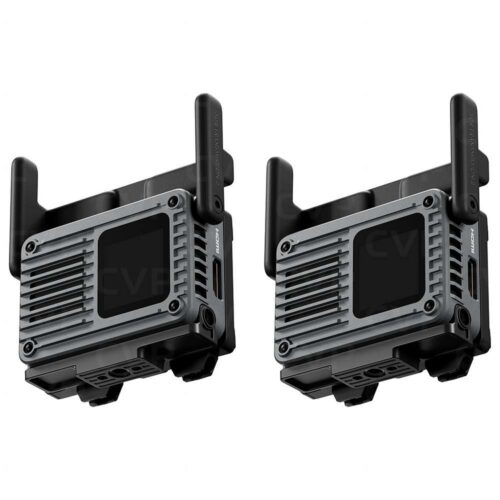
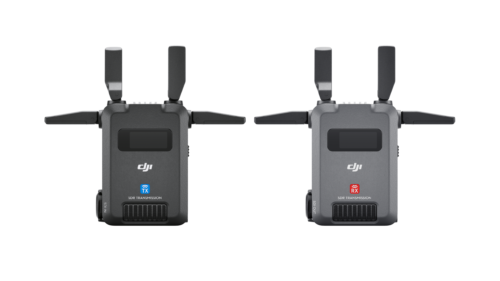
DJI SDR Transmission Receiver
329.00 €
DJI SDR Transmission Receiver is a professional wireless video receiver that provides stable, high-quality real-time video transmission. Powered by SDR technology, the device supports up to 1080p/60fps Full HD video, a 20 Mbps transmission bitrate, and a minimum latency of 35 ms. Its maximum transmission range under European CE regulations reaches up to 2 kilometres. HDMI, SDI, and USB-C outputs allow the receiver to connect to professional monitors and compatible mobile devices. Weighing just 145 grams, DJI SDR Transmission Receiver supports NP-F batteries and USB-C power, making it an excellent choice for filmmakers and videographers who need a reliable and flexible wireless video monitoring solution.
DJI SDR Transmission Receiver – Professional Wireless Video Receiver for Filmmaking and Real-Time Monitoring
DJI SDR Transmission Receiver is a professional wireless video receiver designed to receive high-quality video signals from the DJI SDR Transmission transmitter. The device uses advanced Software Defined Radio (SDR) technology to deliver a stable connection, low latency, and long transmission distances, even in demanding filming environments. Thanks to its compact design, versatile connectivity options, and flexible power supply, the receiver is suitable for professional filmmakers, videographers, directors, camera operators, and production teams.
DJI SDR Transmission Receiver supports Full HD video transmission at resolutions up to 1080p and frame rates of up to 60 fps, with a maximum transmission bitrate of 20 Mbps. The maximum SDR transmission range reaches 3 km under FCC-compliant conditions and 2 km under European CE-compliant conditions. The minimum video transmission latency is just 35 milliseconds, excluding latency introduced by the camera and monitor.
The receiver provides HDMI, SDI, and USB-C video outputs, allowing it to be used with professional external monitors, video equipment, and compatible smartphones and tablets. This makes the DJI SDR Transmission system a practical solution for both smaller production teams and larger film productions.
DJI SDR Technology – Stable Wireless Video Transmission
DJI SDR Transmission Receiver uses the DJI SDR Transmission system, which is built around Software Defined Radio technology. SDR allows wireless connection parameters to be managed flexibly to maintain the most stable possible video signal reception.
Compared with conventional Wi-Fi-based video transmission solutions, SDR technology is designed to provide improved resistance to interference, greater transmission range, and better signal penetration in challenging filming environments.
On a professional film set, signal quality can be affected by walls, metal structures, other wireless devices, and surrounding radio-frequency interference. The DJI SDR Transmission system helps maintain a reliable connection between the transmitter and receiver in these conditions.
The system supports automatic frequency hopping, allowing the transmitter to select a more suitable transmission channel based on the surrounding conditions. Depending on regional regulations and permitted frequencies, DJI SDR Transmission operates in the 2.4 GHz and 5 GHz frequency bands.
DJI SDR Transmission Receiver therefore enables professional wireless video monitoring, allowing the camera operator to concentrate on filming while the rest of the crew follows the action in real time.
Up to 2 km Transmission Range Under European Regulations
One of the most important advantages of the DJI SDR Transmission system is its extensive wireless transmission range.
DJI SDR Transmission Receiver, when used with a compatible transmitter, can receive video signals from distances of up to 3 km under FCC-compliant conditions. Under European CE regulations, the maximum transmission range is 2 km.
These figures are measured in open environments without significant obstacles or radio-frequency interference, using Control mode with Broadcast mode disabled.
Actual operating range depends on filming conditions, transmitter and receiver positioning, obstacles, and the surrounding radio-frequency environment.
Long transmission range is especially useful for outdoor filming, large studios, sports events, and situations where the camera must be positioned a considerable distance from the director or video monitoring team.
For example, a camera operator can move across a large filming area while the director monitors the video feed on a separate display.
The DJI SDR Transmission system reduces the need for long video cables and provides greater freedom of movement on set.
Full HD 1080p Video Transmission at up to 60 fps
DJI SDR Transmission Receiver supports Full HD video signals at resolutions of up to 1920 × 1080 pixels and frame rates of 60 fps, providing a detailed and smooth image for professional real-time monitoring.
The receiver supports 1080p video at frame rates of 23.98, 24, 25, 29.97, 30, 50, 59.94, and 60 fps. It also supports 720p video at 50, 59.94, and 60 fps, as well as 1080i signals, subject to mode-specific limitations.
The system offers a maximum transmission bitrate of 20 Mbps, helping preserve image detail and quality during wireless transmission.
DJI SDR Transmission uses H.264 video encoding, balancing image quality, transmission bitrate, and latency.
Full HD video is well suited for monitoring framing, focus, lighting, and camera movement.
It is important to note that DJI SDR Transmission Receiver is primarily designed for video monitoring rather than replacing the camera’s original high-resolution recording files. For example, when filming in 4K, the receiver can display the camera’s video output configured to a compatible Full HD format.
Low Latency for Professional Real-Time Monitoring
Video transmission latency is one of the most important technical characteristics of a wireless monitoring system.
DJI SDR Transmission Receiver can achieve a minimum transmission latency of 35 milliseconds, excluding delays introduced by the camera and display.
According to DJI measurements, the overall delay associated with displaying the video image is approximately 80 milliseconds when camera and monitor latency are also taken into account. These measurements were conducted using a 1080p/60fps video signal with Broadcast mode disabled.
Low latency is especially important when a director, focus puller, or another camera operator needs to see the camera feed as quickly as possible.
For example, when filming moving subjects, monitoring camera movement, or recording complex scenes, fast video transmission helps the production team make more precise decisions.
The receiver is therefore well suited for professional video monitoring, where minimising the time difference between camera activity and the displayed image is essential.
HDMI, SDI, and USB-C Outputs
DJI SDR Transmission Receiver features several professional interfaces, allowing it to be integrated into different filmmaking and video production workflows.
The device includes an HDMI output, an SDI output, and a USB-C interface that can be used for video output and firmware updates.
The HDMI output is suitable for connecting a wide range of external video monitors and other HDMI-compatible devices. It is a practical solution for smaller production teams, content creators, and independent videographers.
The SDI output is particularly useful in professional film productions that use SDI-equipped monitors and video equipment.
SDI connections are widely used in professional video production because of their reliable connection format and suitability for larger production systems.
The USB-C video output allows a compatible smartphone or tablet to be used as an external monitoring device.
According to DJI’s official specifications, the receiver’s HDMI, SDI, and USB-C outputs can be used simultaneously, allowing the video feed to be distributed to multiple devices without requiring a separate signal splitter.
This makes the receiver especially practical when several team members, such as a director, camera assistant, and client, need to view the same camera feed at the same time.
USB-C Monitoring with a Smartphone or Tablet
One of the most practical features of the DJI SDR Transmission system is the ability to monitor video using a smartphone or tablet.
DJI SDR Transmission Receiver can transmit video through a USB-C cable to a compatible mobile device, where the feed can be viewed using the DJI Ronin app.
This makes it possible to create a compact monitoring setup without using a dedicated professional video monitor.
The solution is especially useful for smaller production teams where mobility and quick setup are important.
For example, a director or assistant can monitor the camera feed on a tablet while the receiver is positioned separately in a suitable location.
In addition to video display, the DJI Ronin app provides various monitoring assistance features, including image analysis tools and camera control capabilities, depending on the connected device and operating mode.
When using the USB-C connection, mobile device compatibility must be considered. The receiver may supply limited electrical power to the connected device, but this may not be sufficient to charge tablets with higher power consumption effectively.
Broadcast Mode for Multiple Receivers
DJI SDR Transmission Receiver supports the DJI SDR Transmission system’s Broadcast mode, which allows one transmitter to send a video feed to a large number of receivers simultaneously.
According to DJI, the system does not impose a fixed numerical limit on the number of receivers that can connect to a single transmitter in Broadcast mode.
This is a significant advantage for larger film productions where multiple crew members need to monitor the same camera feed.
For example, a director can use one receiver, a camera assistant another, and a client or production manager a third.
This arrangement allows each participant to use a separate monitor and follow the camera feed independently.
However, certain system control and communication features are only available in Control mode.
Maximum transmission distance and other operating parameters may also differ in Broadcast mode compared with the one-transmitter, one-receiver configuration used in Control mode.
Control Mode for Advanced Control and Collaboration
In addition to Broadcast mode, DJI SDR Transmission Receiver supports Control mode, which is designed for workflows requiring two-way communication and control functions.
In Control mode, additional DJI SDR Transmission features can be used, including compatible device remote control and two-way voice communication.
This is useful, for example, when a director needs to communicate directly with the camera operator or when the crew uses DJI Ronin system control functions.
The receiver features a 3.5 mm stereo jack that can be used for supported voice communication functions.
DJI SDR Transmission enables one-to-one voice communication between the transmitter and receiver in Control mode, helping improve communication within the production team.
A suitable audio accessory and proper configuration are required to use voice communication.
Control mode is especially valuable in professional film productions where rapid communication and simultaneous video monitoring help streamline the workflow.
Compatibility with the DJI Ronin System
DJI SDR Transmission Receiver is part of DJI’s professional video accessory ecosystem and allows the DJI SDR Transmission system to be used with compatible DJI Ronin stabilisers and control solutions.
The DJI SDR Transmission system supports remote control of selected DJI RS Series stabilisers and compatible camera functions.
The system can be used with stabilisers such as DJI RS 3 Pro, DJI RS 4, and DJI RS 4 Pro, subject to the manufacturer’s compatibility and connection requirements.
This integration is particularly useful in professional filming situations where the camera is mounted on a stabiliser and an operator or another crew member wants to monitor the video feed and access supported control functions remotely.
Through the DJI Ronin app, certain cameras support remote control functions such as aperture, shutter speed, ISO adjustment, and starting photo or video recording.
These capabilities depend on the specific camera model, connection method, and DJI’s published compatibility list.
The receiver is not a standalone stabiliser controller. Instead, it operates as part of the DJI SDR Transmission system, through which supported remote control features can be accessed.
Camera Metadata Transmission
In professional film production, it is often important to monitor technical camera settings in addition to the video image.
The DJI SDR Transmission system supports metadata transmission from selected professional cinema cameras through an SDI connection.
For example, when using compatible ARRI and RED cameras, the system can transmit important camera information, helping directors, camera operators, and digital imaging technicians (DITs) monitor technical shooting parameters.
Metadata can provide an overview of camera recording settings and other supported parameters.
This functionality is especially valuable in larger productions where checking camera settings and sharing technical information are part of everyday workflows.
Metadata display capabilities depend on the camera, connection, and monitoring device being used.
Flexible Power Supply with NP-F Battery and USB-C
DJI SDR Transmission Receiver supports multiple power sources, allowing it to be used in both stationary and mobile filming environments.
The receiver can be powered by a standard Sony NP-F type battery, with a supported voltage range of 6.8–8.4 V.
NP-F batteries are widely used in professional video production, powering equipment such as external monitors, LED lights, and other video accessories.
This makes the receiver easy to integrate into existing video equipment setups, particularly when the production team already owns NP-F batteries.
The receiver also supports power input through USB-C. When using the USB Power Delivery standard, a 9 V / 2 A input is supported.
With another supported USB-C power configuration, a DC voltage range of 6.8–17.2 V is permitted, provided a suitable power solution meeting the manufacturer’s requirements is used.
The receiver’s typical power consumption is approximately 8.3 W, allowing relatively compact power sources to be used.
A flexible power supply is particularly beneficial during outdoor filming where access to mains electricity may be limited.
Compact and Lightweight Construction
DJI SDR Transmission Receiver is designed for professional applications where equipment dimensions and weight directly affect workflow efficiency.
The receiver weighs approximately 145 grams with antennas, making it convenient to transport and integrate into various production setups.
Its dimensions without antennas are 86.5 × 64 × 32 mm.
The compact construction allows the receiver to be positioned near an external monitor, mounted on a video equipment rig, or installed in another suitable location.
Low weight is especially useful in mobile filming environments where equipment frequently needs to be repositioned or transported.
The receiver’s design is adapted to professional video production, where combining reliable performance with compact dimensions is essential.
Reliable Operation in Different Filming Conditions
DJI SDR Transmission Receiver is intended for use in a variety of professional filming environments.
Its operating temperature range is –10°C to +40°C, allowing it to be used in cooler outdoor conditions and warmer studio environments.
This temperature range gives videographers and film crews flexibility when selecting filming locations.
However, the device is not intended for unrestricted use in rain, snow, or other wet conditions without appropriate protection.
Wireless connection quality is also affected by the filming environment. For the best possible signal, the transmitter and receiver should ideally have a clear line of sight, and antennas should not be obstructed by large metal structures.
Proper installation and positioning help achieve the system’s best possible performance.
Suitable for Film Productions and Commercial Shoots
In professional film productions, it is important for the director and other crew members to monitor the camera feed in real time.
DJI SDR Transmission Receiver allows the camera image to be transmitted wirelessly to a separate monitor, reducing the need for long video cables.
This is particularly useful for complex camera movements, dynamic shots, and productions involving multiple crew members.
For example, during a commercial shoot, the camera operator can move with the camera while the director monitors framing and actor performances on a remote display.
Broadcast mode allows the same video feed to be shared with multiple receivers, giving each crew member an independent monitoring option.
Thanks to low latency and Full HD image quality, the system helps improve team collaboration and reduces the need to move repeatedly to the camera.
Practical Solution for Events and Outdoor Filming
DJI SDR Transmission Receiver is also well suited for event filming, documentary projects, and outdoor shoots.
In these situations, the camera’s position may change quickly, and a traditional cable connection can restrict the operator’s freedom of movement.
Wireless video transmission allows the monitoring device to be positioned separately from the camera, making the workflow more flexible.
For example, at sporting events, the camera operator can follow moving action across a large area while the production team receives the video feed at a remote workstation.
In documentary production, the compact receiver enables a smaller monitoring setup that can be prepared quickly.
Using the USB-C output with a compatible mobile device makes the system particularly practical when a professional external monitor is unnecessary or unavailable.
DJI SDR Transmission Receiver vs. Conventional Wi-Fi Video Solutions
Conventional Wi-Fi-based video monitoring systems may be sufficient for simpler recording tasks, but professional filmmaking often places higher demands on signal stability, range, and latency.
DJI SDR Transmission Receiver uses a dedicated SDR connection optimised for professional wireless video transmission.
The system provides a transmission bitrate of up to 20 Mbps, 1080p/60fps video, and a minimum transmission latency of 35 ms.
SDR technology also enables a longer transmission range than the DJI SDR Transmission system’s standard Wi-Fi connection, which DJI specifies as having a maximum range of up to 200 metres.
It is important to distinguish that a direct Wi-Fi connection to a smartphone or tablet is primarily a function of the DJI SDR Transmission transmitter. DJI SDR Transmission Receiver receives video through the SDR connection and can then output it to a compatible mobile device via USB-C.
The receiver is therefore designed for users who need a professional and flexible video monitoring system.
Compatibility with the DJI SDR Transmission Transmitter
DJI SDR Transmission Receiver is designed for use with the DJI SDR Transmission transmitter.
The transmitter connects to a camera through HDMI or SDI and wirelessly sends the video signal to the receiver.
The receiver receives the signal and outputs it to a connected monitor or another compatible device.
It is important to note that DJI SDR Transmission Receiver is a standalone receiver, not a complete transmitter-and-receiver kit.
A compatible DJI SDR Transmission transmitter is required for wireless video transmission.
Compatibility with other DJI video transmission systems, including DJI Transmission or DJI SDR Transmission 2 devices, should not be assumed, as these are separate product systems.
Before purchasing, it is advisable to verify the compatibility of existing equipment using DJI’s official documentation.
DJI SDR Transmission Receiver – Professional Solution for Reliable Video Monitoring
DJI SDR Transmission Receiver is a compact and capable wireless video receiver designed to meet the requirements of professional filmmakers and videographers.
The device uses DJI SDR technology to provide stable, interference-resistant video reception, up to 1080p/60fps Full HD image quality, a maximum 20 Mbps transmission bitrate, and a minimum 35 ms transmission latency.
The maximum transmission range under European CE regulations is up to 2 km, making the system suitable for larger filming areas.
HDMI, SDI, and USB-C outputs provide flexible connectivity with professional monitors and compatible mobile devices. Broadcast mode allows one transmitter’s video feed to be distributed to multiple receivers, while Control mode supports additional communication and control functions.
Weighing approximately 145 grams, the receiver supports both NP-F battery power and USB-C power input, making it suitable for studio and outdoor filming.
With its professional connections, low latency, and versatile applications, DJI SDR Transmission Receiver is an excellent choice for film productions, commercial shoots, documentary projects, and other video production workflows where reliable wireless video monitoring is essential.
Look at other DJI products here.