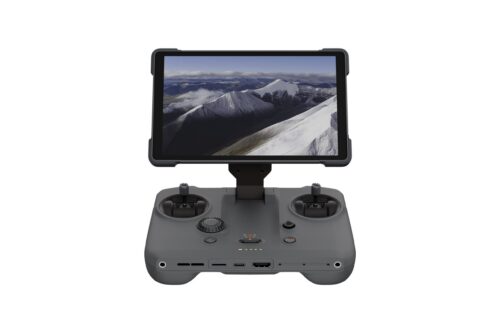
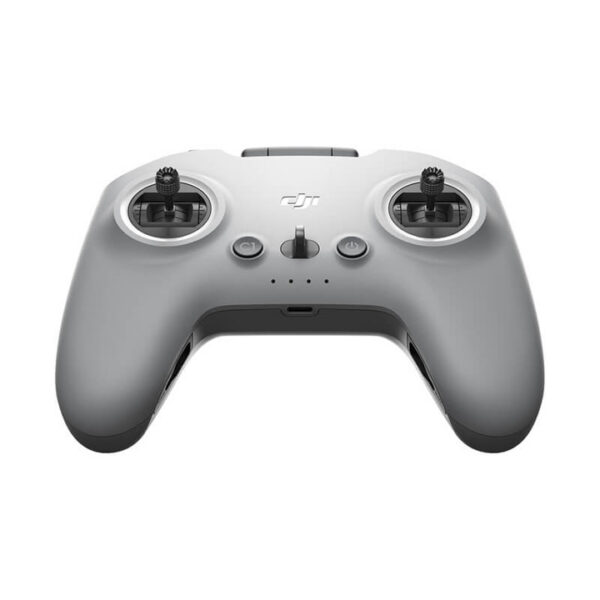
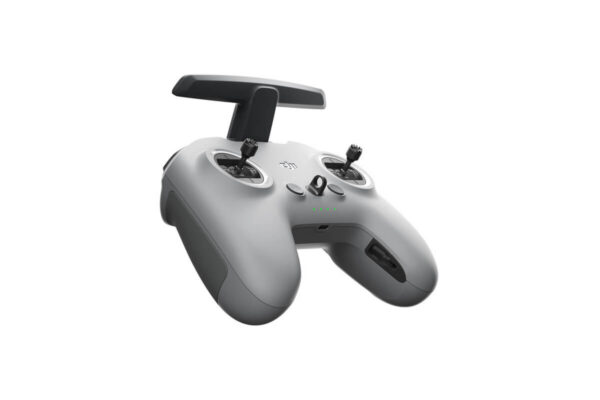
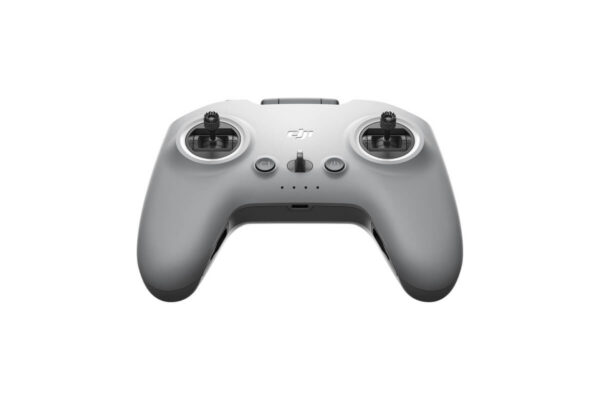
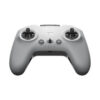
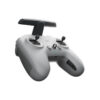
DJI FPV Remote Controller V2
149.00 €
Hall Effect control sticks deliver precise input and fast responsiveness, making the controller suitable for both beginners and experienced FPV pilots.
The controller is compatible with DJI FPV and DJI Avata series devices, excluding Avata 2, and offers a transmission range of up to 10 km under ideal conditions.
DJI FPV Remote Controller V2 – Precise and Ergonomic Controller for DJI FPV Flying
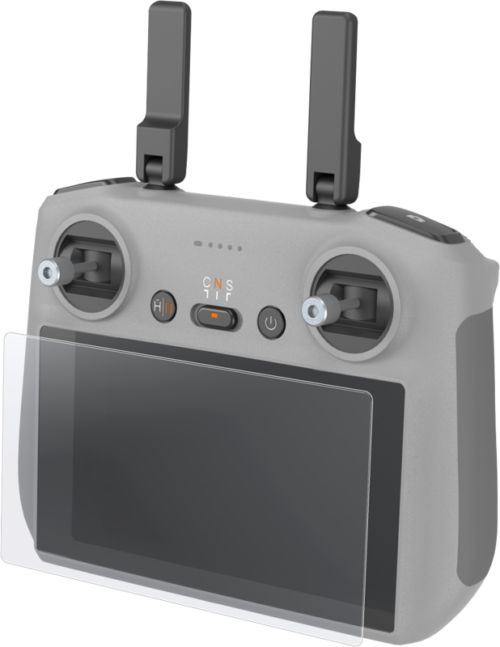
DJI FPV Remote Controller V2 is an ergonomic remote controller designed specifically for the DJI FPV system, offering precise control, low-latency connectivity, and long battery life for both recreational and professional FPV flying. Featuring a traditional dual-stick layout, the controller is intended for pilots who want maximum control over the aircraft and the ability to use different DJI FPV flight modes, ranging from stabilized flying to fully manual FPV control.
DJI FPV Remote Controller V2 operates on both 2.4 GHz and 5.8 GHz frequency bands and, according to DJI specifications, offers a control range of up to 10 km in FCC regions and up to 6 km in CE regions under suitable conditions. The integrated battery provides approximately nine hours of operating time, while a full charge takes around 2.5 hours. With dimensions of approximately 190 × 140 × 51 mm and a weight of around 346 grams, the controller offers a good balance between portability and a stable, confident feel in the hands.
Designed Specifically for FPV Pilots
Controlling an FPV drone differs significantly from flying a conventional camera drone. While a traditional drone may automatically maintain altitude and position for much of the flight, FPV flying—especially in Manual mode—depends far more on the pilot’s precise control inputs.
DJI FPV Remote Controller V2 is designed specifically for this type of control. Its two full-size control sticks provide precise input for throttle, yaw, pitch, and roll, giving the pilot a more traditional FPV radio-style control experience.
This makes the controller suitable for users who want to learn or practice a more traditional FPV flying style and gradually progress from stabilized flight modes toward full manual control.
Precise Control for Dynamic FPV Flying
In FPV flying, even very small stick movements can produce noticeable changes in the aircraft’s movement. For this reason, the mechanical feel and precision of the control sticks are especially important.
DJI FPV Remote Controller V2 provides clear and predictable control, allowing the pilot to perform both slow cinematic movements and faster directional changes, climbs, descents, and turns.
Precise control is important not only for fast freestyle flying but also for professional FPV videography. When creating smooth and controlled flight paths, the pilot must be able to make very small changes to the aircraft’s angle and speed without introducing abrupt movement.
Suitable for Manual Mode
One of the most important applications of the DJI FPV Remote Controller V2 is using Manual mode within the DJI FPV system. In Manual mode, the aircraft behaves more like a traditional FPV drone, with significantly reduced or absent automatic stabilization depending on the system and configuration.
This gives the pilot greater creative freedom but also requires considerably more skill. The aircraft’s angle, altitude, and flight path must be actively controlled throughout the flight.
For this reason, it is strongly recommended to practice in an FPV simulator before flying in Manual mode. Using a full-size controller in a simulator helps build muscle memory that can later be transferred to real-world flying.
Dual-Band Radio Communication
DJI FPV Remote Controller V2 operates on the 2.400–2.4835 GHz and 5.725–5.850 GHz frequency bands. Dual-band operation allows the DJI system to work effectively in different radio environments and use the appropriate connection according to regional regulations.
Radio performance always depends on the surrounding environment. Buildings, trees, metal structures, other transmitters, and electromagnetic interference can all affect the actual working range.
FPV pilots should therefore consider not only the theoretical maximum distance but also signal quality, location, and applicable local flight regulations.
Up to 10 km Maximum Control Range
According to DJI specifications, the DJI FPV Remote Controller V2 offers a maximum control range of up to 10 km in FCC regions and up to 6 km in CE, SRRC, and MIC regions. These figures are measured under ideal conditions and do not mean that such distances will always be achievable or legally permitted in real-world environments.
In Europe, CE regulations apply, along with requirements related to visual line of sight, airspace, and local drone legislation.
In practical use, a larger radio link margin is valuable primarily because it helps maintain a more stable connection when the aircraft is farther from the pilot or when the radio environment becomes more challenging.
Powerful Radio Transmission for a Stable Link
The transmission power of the DJI FPV Remote Controller V2 depends on the selected frequency band and regional regulations. On 2.4 GHz, maximum EIRP reaches up to 28.5 dBm in FCC regions and up to 20 dBm in CE regions. On 5.8 GHz, the corresponding values are up to 31.5 dBm FCC and up to 14 dBm CE.
These differences are the result of regional restrictions governing radio-frequency use, meaning the same controller may operate at different maximum transmission powers in different countries.
Users typically do not need to adjust these values manually, but from a technical perspective they help explain why theoretical maximum range varies by region.
Ergonomic Design for Longer Flight Sessions
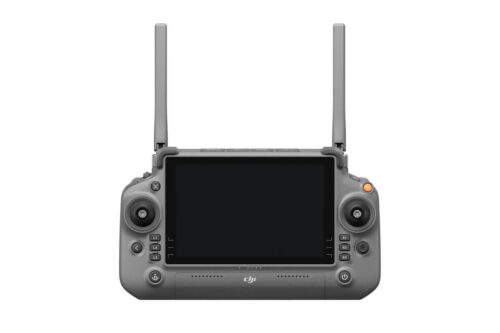
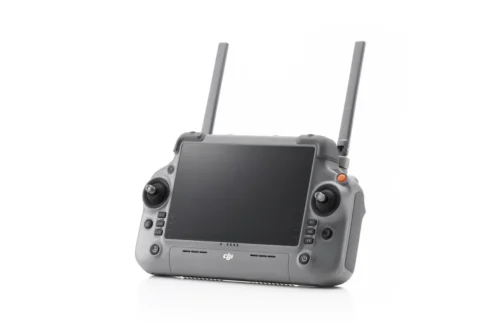
DJI FPV Remote Controller V2 is designed to be held with both hands, with control sticks, switches, and buttons positioned so that key functions remain quickly accessible during flight.
The controller measures approximately 190 × 140 × 51 mm and weighs around 346 grams. This makes it noticeably more compact than many larger traditional RC transmitters while still providing enough space for full-size control sticks and a secure grip.
The 346-gram weight helps create a stable control feel without making the controller unnecessarily heavy during longer flying sessions.
Long Battery Life of Approximately Nine Hours
An FPV flying day may involve several batteries, simulator practice, and repeated flight sessions. The controller battery should not become a limiting factor in such a workflow.
According to DJI, the DJI FPV Remote Controller V2 provides approximately 9 hours of operating time on a full charge.
This means that under normal conditions the controller does not need to be recharged continuously during a typical flying day. The pilot can instead focus on managing the drone’s flight batteries, which have a much shorter operating time than the controller.
Long battery life is particularly useful during travel and outdoor work where charging opportunities may be limited.
Approximately 2.5-Hour Charging Time
A full charge takes approximately 2.5 hours according to DJI specifications.
Combined with around nine hours of operating time, this means the controller can be recharged relatively quickly and then used across several consecutive flying sessions.
In practice, it is a good idea to charge the controller together with the FPV goggles and flight batteries before a shooting day so that every component of the system is ready to use from the start.
Physical Controls for Fast Reactions
During FPV flying, the pilot needs to access important functions without removing their attention from the image inside the goggles. This makes the placement of physical buttons and switches especially important.
DJI FPV Remote Controller V2 allows flight modes and other important functions to be controlled directly from the transmitter. Physical controls provide tactile feedback and help the pilot locate the required function even while wearing FPV goggles.
This is one reason why a dedicated FPV remote controller is particularly well suited to manual flying compared with a motion-based controller alone.
Well Suited to Cinematic FPV Videography
FPV does not necessarily mean aggressive freestyle flying. Many professional videographers use FPV drones primarily for smooth and dynamic cinematic sequences.
DJI FPV Remote Controller V2 allows the pilot to control the aircraft very precisely, which is important for slow camera movements, subject tracking, and smooth altitude transitions.
In real estate, automotive, sports, and travel videography, for example, FPV can enable flight paths that are more difficult to achieve with a conventional stabilized camera drone.
In these scenarios, the smoothness of the final result depends heavily on the pilot’s skill, making a precise controller an important part of the workflow.
A Good Choice for FPV Simulator Training
One of the safest and most cost-effective ways to learn FPV flying is through a simulator. Manual FPV control differs so much from operating a conventional stabilized drone that initial training is best done in a virtual environment.
DJI FPV Remote Controller V2 allows users to become familiar with stick response and develop the movements required later during real-world flights.
The main advantage of a simulator is the ability to make mistakes without risking damage to the drone. Pilots can practice takeoffs, turns, altitude control, smooth flight paths, and landings until the controls become intuitive.
Suitable for Both Thumb and Pinch Control Styles
FPV pilots generally use two main techniques for operating the control sticks. With thumb control, the sticks are moved primarily using the thumbs, while the pinch technique uses a combination of the thumb and index finger.
The traditional layout of the DJI FPV Remote Controller V2 supports both approaches depending on the pilot’s preference.
For precise cinematic flying, many pilots prefer pinch or hybrid techniques because they can offer finer control over small stick movements. Others prefer thumb control for its simplicity and speed.
The best technique depends on the individual pilot, and consistent practice is the most important factor.
Compact Form for Travel and Shooting Days
FPV equipment can quickly become bulky because the kit often includes the drone, goggles, batteries, chargers, propellers, tools, and other accessories.
With dimensions of approximately 190 × 140 × 51 mm, the DJI FPV Remote Controller V2 is compact enough to fit comfortably inside a dedicated FPV bag or transport case.
This makes it practical for both traveling FPV pilots and professional videographers who need equipment that can be packed and transported efficiently.
Actual Radio Range Depends on the Environment
Although DJI lists a maximum transmission distance of up to 10 km, this should be considered an ideal-condition specification rather than a guaranteed operating range.
Trees, buildings, terrain, radio interference, and even the orientation between the pilot and aircraft can affect connection quality.
FPV flying must also comply with local regulations. Within the European Union, technical transmission capability does not automatically mean that flying several kilometers away is legally permitted. Flight distance must always be planned according to current drone regulations and the requirements of the specific operation.
Technical Specifications
DJI FPV Remote Controller V2 is a dual-stick remote controller designed for DJI FPV flying and operates on 2.400–2.4835 GHz and 5.725–5.850 GHz frequency bands. According to DJI specifications, the maximum theoretical transmission distance reaches up to 10 km in FCC regions and up to 6 km in CE, SRRC, and MIC regions. On 2.4 GHz, transmission power reaches up to 28.5 dBm FCC and up to 20 dBm CE, while on 5.8 GHz the corresponding values are up to 31.5 dBm FCC and up to 14 dBm CE.
The controller measures approximately 190 × 140 × 51 mm and weighs around 346 grams. Its integrated battery provides approximately 9 hours of operating time, while a full charge takes around 2.5 hours.
These characteristics make the DJI FPV Remote Controller V2 suitable for extended training sessions as well as professional shooting days involving multiple flight batteries.
A Practical Spare Controller for Active DJI FPV Users
For professional or intensive FPV use, having a second controller can also provide a useful backup solution. The remote controller is a critical part of the entire flight system, and manual control is not possible without a functioning transmitter.
The DJI FPV Remote Controller V2 can therefore serve either as a replacement for an existing controller or as an additional transmitter for another compatible FPV setup.
Before purchasing, it is always advisable to verify compatibility with the specific aircraft, air unit, goggles, and firmware version, as different generations within the DJI FPV ecosystem may use different control solutions.
Suitable for Both Learning and Professional Use
For beginners, the DJI FPV Remote Controller V2 provides a way to learn traditional FPV control and develop the skills required for Manual mode.
For experienced pilots, the same controller provides a precise and familiar dual-stick system for cinematic, freestyle, and other FPV applications.
For professional videographers, a precise controller also makes it easier to repeat flight paths, perform smooth camera movements, and maintain a predictable control feel during demanding shoots.
Why Choose DJI FPV Remote Controller V2?
DJI FPV Remote Controller V2 is an excellent choice for pilots who want to use the DJI FPV system with a traditional dual-stick control layout. Its ergonomic design, precise control feel, 2.4 GHz and 5.8 GHz radio communication, and long battery life of approximately nine hours make it suitable for training, recreational flying, and professional FPV videography.
Its approximately 346-gram weight and 190 × 140 × 51 mm dimensions provide a good compromise between portability and a stable control feel, while the technical maximum transmission range of up to 10 km under FCC conditions provides substantial radio-link capability. In European CE regions, the corresponding maximum is up to 6 km.
If your goal is to learn manual FPV flying, practice in a simulator, capture smooth cinematic footage, or use the DJI FPV system with precise traditional controls, the DJI FPV Remote Controller V2 is one of the key components for achieving a complete FPV flying experience.
View the selection of remote controllers here.
| Mõõdud | 190 × 140 × 51 mm |
|---|---|
| Kaal | u. 346 g |
| Töösagedus | 2.400–2.4835 GHz / 5.725–5.850 GHz |
| Edastuskaugus | kuni 10 km (FCC), kuni 6 km (CE/SRRC/MIC) |
| Latentsus | u. 7 ms |
| Aku maht | 2600 mAh |
| Aku pinge | 3.6 V |
| Tööaeg | kuni 9 h |
| Charging time | u 2.5 h |
| Operating temperature | -10 °C kuni 40 °C |
| Juhtkangide tüüp | Hall Effect juhtkangid |
| Ühilduvus | DJI FPV |