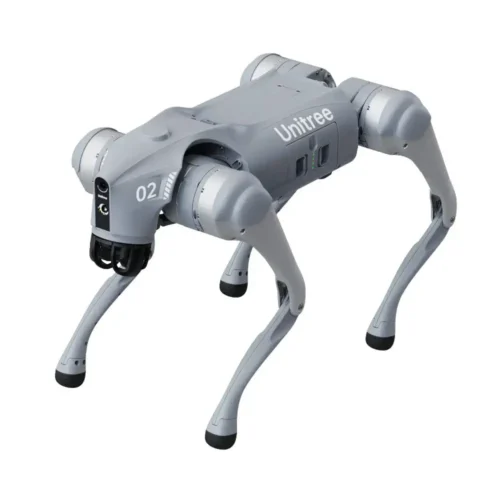
Unitree A2-W Standard – a wheeled quadruped for industry and development
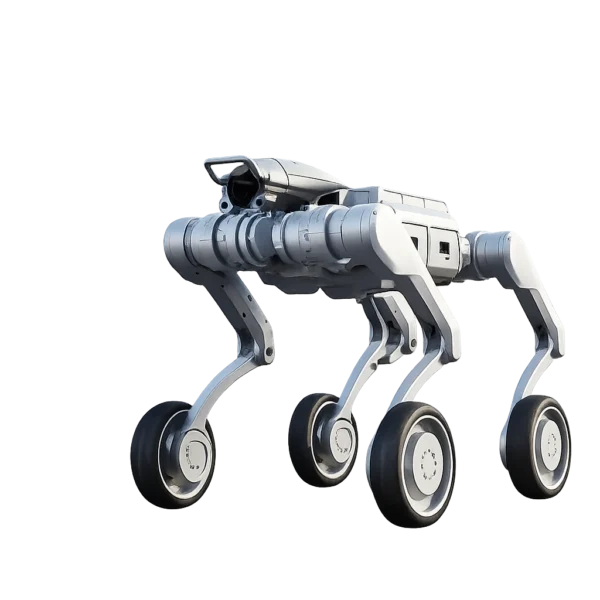
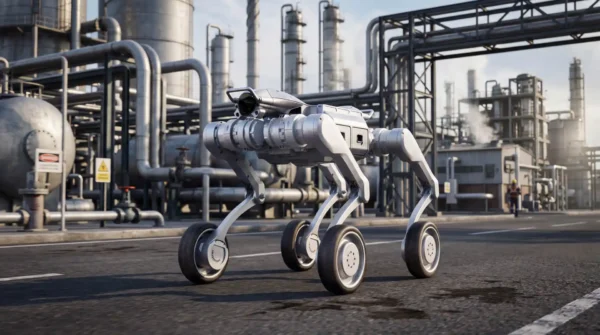
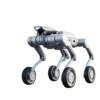
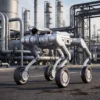
Unitree A2-W Standard is an industrial robot platform combining wheel-driven mobility with articulated legs. It suits businesses, research teams and system integrators building mobile solutions for industrial inspection, site logistics or emergency response support. Custom development support and external interfaces allow application-specific software and equipment to be integrated into the platform.
Wheels, articulated legs and a 25 kg payload
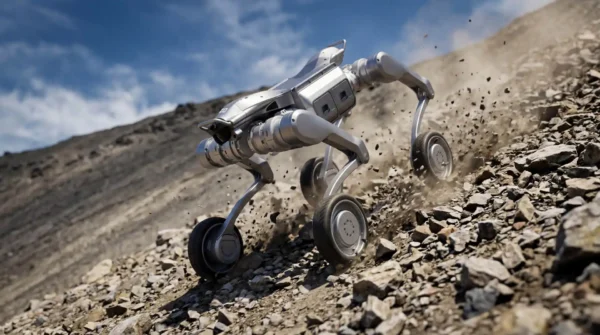
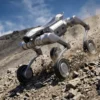
A2-W Standard has 16 degrees of freedom and wheels measuring 190 mm in diameter and 51 mm in width. Its primary speed range is 0–3 m/s, with a maximum achievable speed of approximately 6 m/s under suitable conditions. Articulated legs support negotiating stair steps up to 30 cm high and slopes of approximately 45°.
Payload capacity during continuous movement is approximately 25 kg. Maximum standing load is approximately 100 kg; when moving, use the moving payload rating. Maximum joint torque is approximately 180 N·m. The drive system uses permanent magnet synchronous motors, dual encoders and industrial crossed roller bearings.
Dual-bay battery power for longer tasks
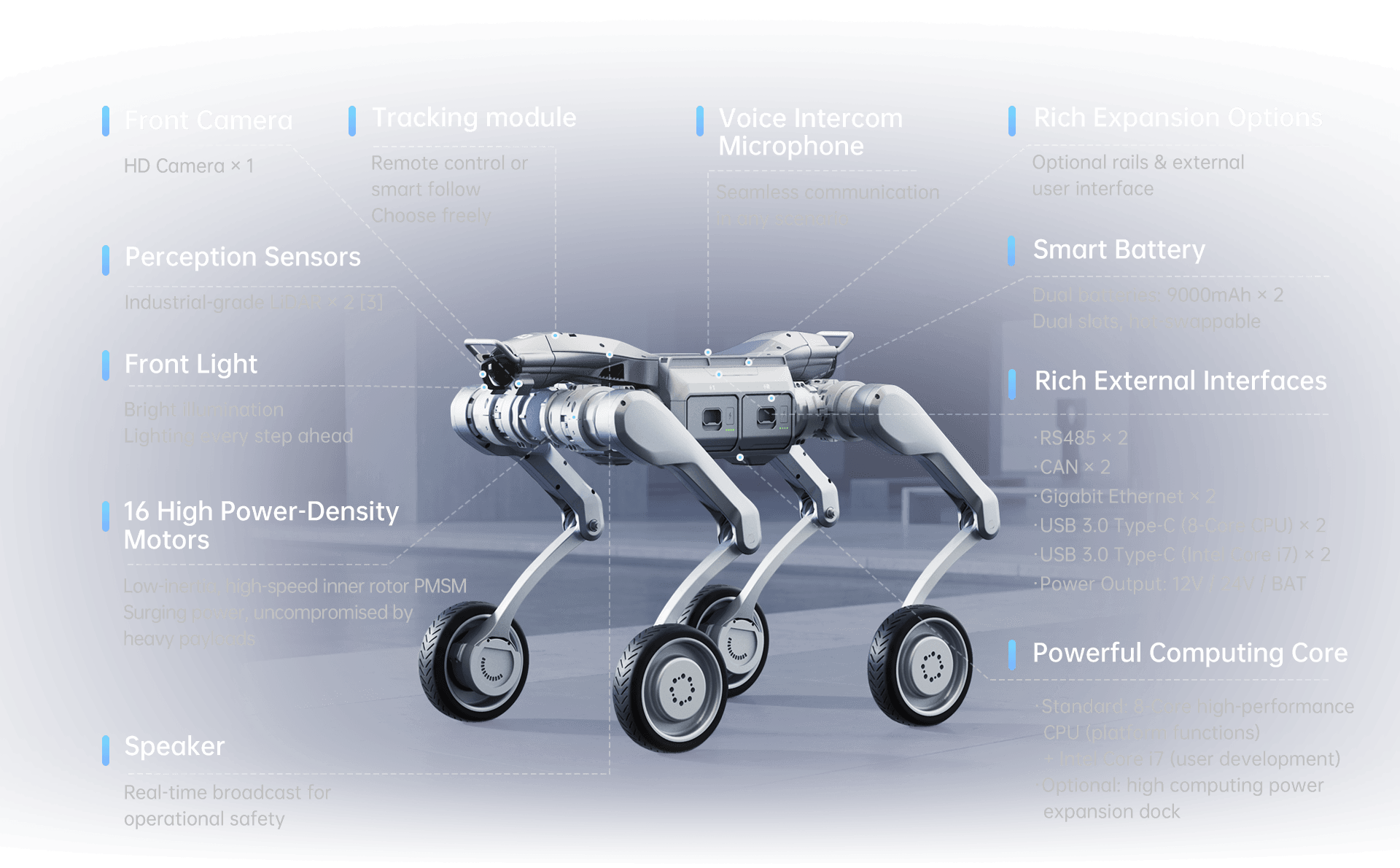
Supply voltage is 50.4 V. One battery provides 9000 mAh capacity and 453.6 Wh of energy. A two-battery configuration provides a combined 18,000 mAh and 907.2 Wh. The parallel power system allows one battery to be replaced while the other continues powering the robot.
Without payload, A2-W runtime figures exceed 3.5 hours of continuous movement, covering approximately 35 km. With a 25 kg payload, corresponding figures exceed 1.5 hours and approximately 15 km. These results were obtained under laboratory conditions; actual runtime and range depend on terrain, speed, battery configuration, accessory power consumption and environmental conditions.
Sensing and computing for custom applications
Unitree A2-W Standard includes one LiDAR and one HD camera. A front light illuminates the area ahead, and a speaker and microphone array are also provided. Wireless connectivity includes Wi-Fi 6 and Bluetooth 5.2.
An eight-core processor controls the platform, while an Intel Core i7 computer is provided for user development. External connections include two RS485, two CAN and two Gigabit Ethernet interfaces. Four USB 3.0 Type-C ports are split between the platform processor and Intel Core i7 computer, with two for each. Power outputs are 12 V, 24 V and BAT.
The robot supports custom development and OTA software updates. GPS, 4G and a wireless tracking module are optional on Standard version. Implementing autonomous workflows requires appropriate software, equipment and system configuration.
Dimensions, construction and operating conditions
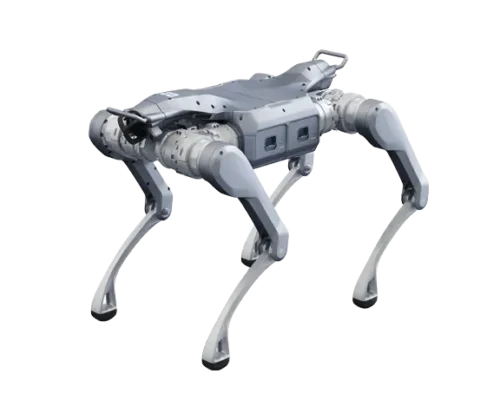
Built from aluminum alloy and high-strength engineering plastic, the robot measures 900 × 440 × 625 mm standing and 930 × 685 × 210 mm lying prone. Weight is approximately 45 kg without a battery and approximately 52 kg with a battery. Consider these specifications when planning transport, storage and working areas.
Standard version protection is rated IP56, and operating temperature ranges from −20 to +55 °C. Local air cooling helps manage component heat. Follow operating instructions and maintain a safe distance from people when using this robot with its powerful actuators.