
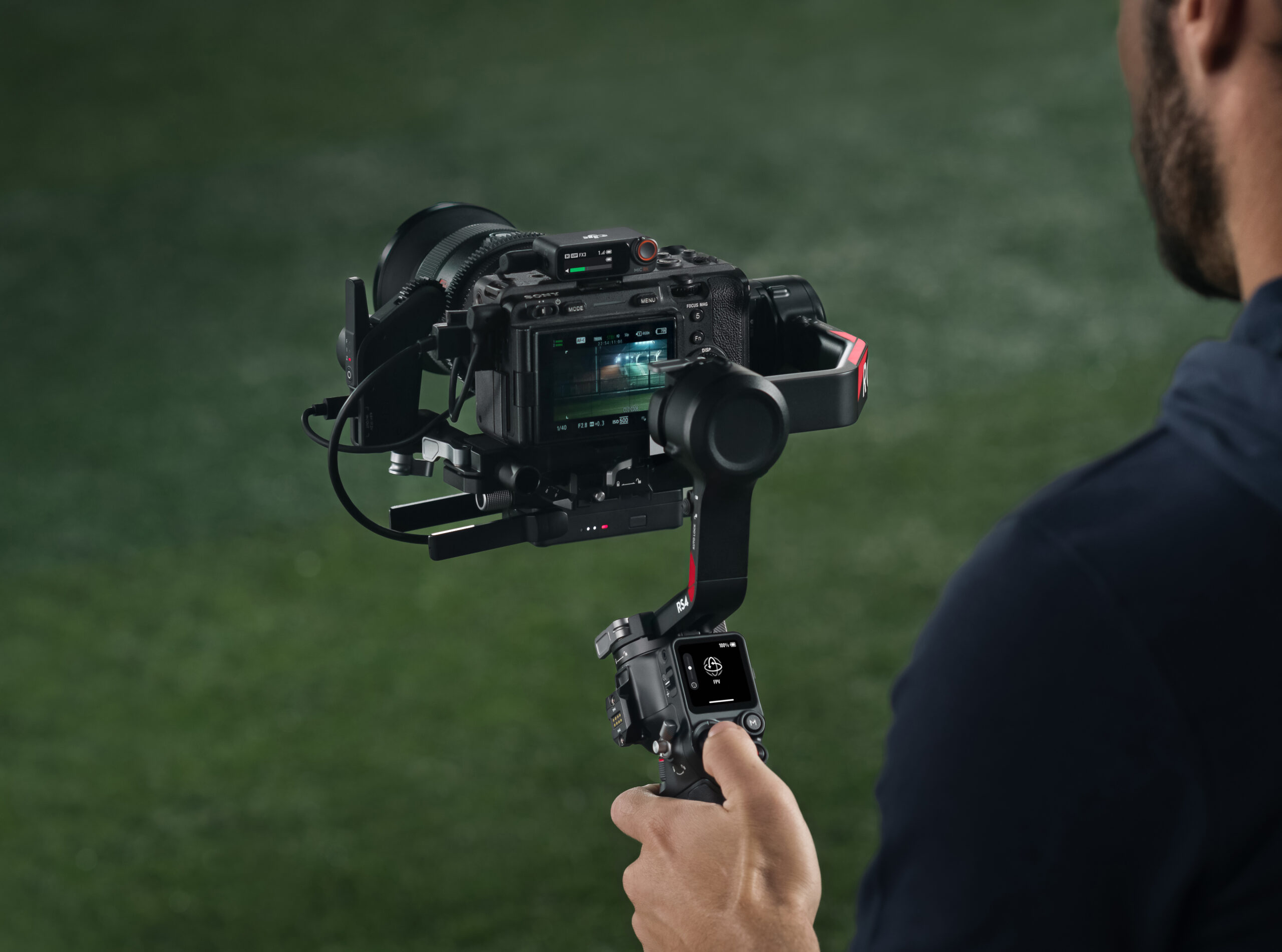
The DJI RS4 is the latest handheld gimbal that shows why DJI is the market leader. Gimbals can often be cumbersome to use – they are time-consuming to set up and can cause inconvenience, which is why many videographers try to avoid them. However, DJI has taken these concerns on board and the RS4 is the next step in making gimbal use easier and less stressful.
The RS4 brings a number of significant improvements over the previous model, the Ronin RS 3. Firstly, the Teflon coating on the gimbal’s arms, combined with the micro-coupling button on the camera mount, makes balancing and adjustment much easier. The Teflon surfaces help to make small shifts at the axis mounting points without too much effort and pressure, avoiding excessive shifting. The large locking clamps on the arms make balancing quick and easy, so I was able to get my camera gimbal balanced very quickly.
In terms of balance, the RS4 has a longer tilt arm than its predecessor, allowing more accessories to be added to the camera without any balance problems. The arm is 8.5mm longer than on the RS 3, which is enough to attach microphones on top of the camera and/or filters in front of the lens. The Ronin RS 4 can carry up to 6.6 pounds (3 kg), the same as the RS 3, but the new arm allows the weight to be placed in different locations around the camera’s centre of gravity.
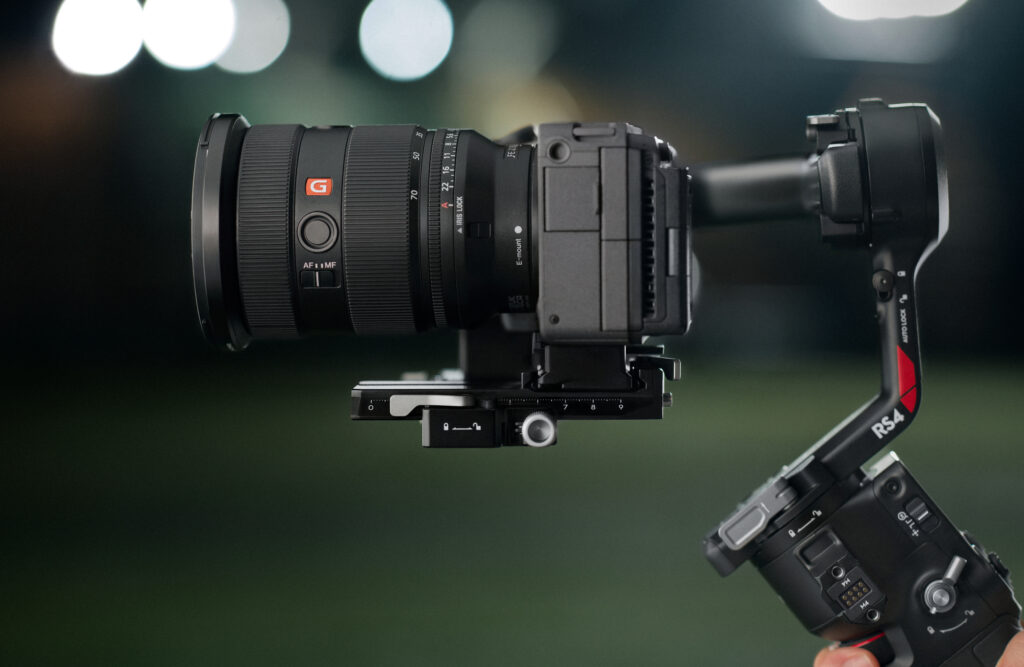
A big innovation is also the simplification of making vertical videos. While on the RS 3, Portrait mode had to be set in the PTF settings, on the RS 4 it’s as simple as turning the camera’s mounting plate. The camera mount has two connection points – one at the top and one at the bottom – and a quick-release button. Simply release the plate, flip it over, and secure with the point below to keep the camera in the vertical position. It’s quick and easy, the camera doesn’t need to be re-balanced, and all the tracking modes and options available via the joystick are still available.
The RS4 also introduces a fourth-generation stabilisation algorithm that improves stabilisation in both horizontal and vertical modes, even when the situation is bouncy, such as when running. If you opt for the RS4 Combo, you’ll also get the Focus Pro Motor in the box, which is 30% faster than the previous model. This motor allows you to adjust the rotation speed, torque and direction of the zoom and focus rings via the menu.
As before, the gimbal’s control buttons and dials can be used to control certain elements of compatible cameras, including stopping and starting recording, snapping shots and adjusting exposure. These functions are available via either Bluetooth or USB connection.
Taking the time and effort to get to know the DJI RS4 is well worth it. Smooth camera operation is guaranteed, whether it’s during a normal walk, a fast walk or a run, even with lots of accessories attached to the lens.
The DJI RS4 can be found for sale in our online shop here.