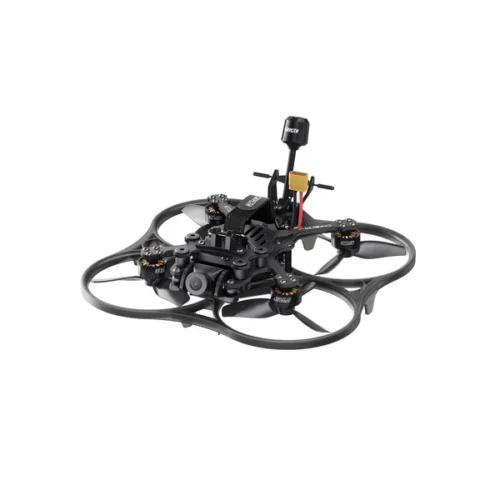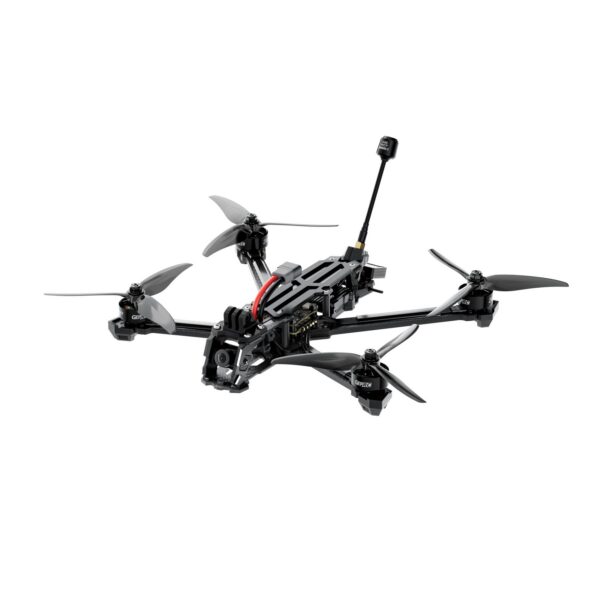
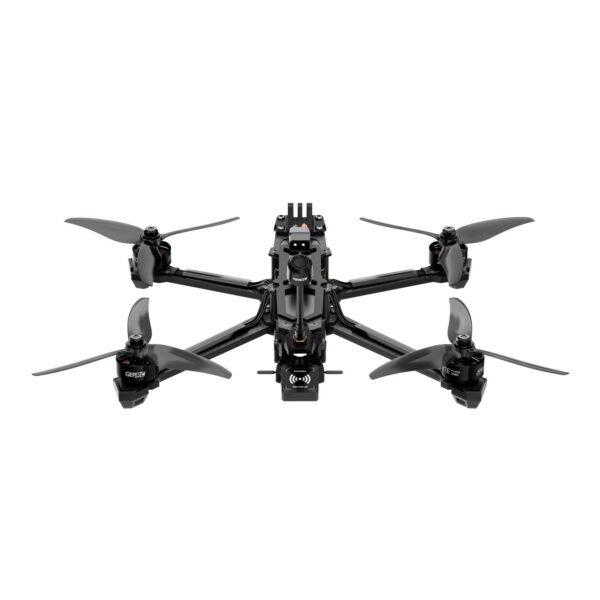
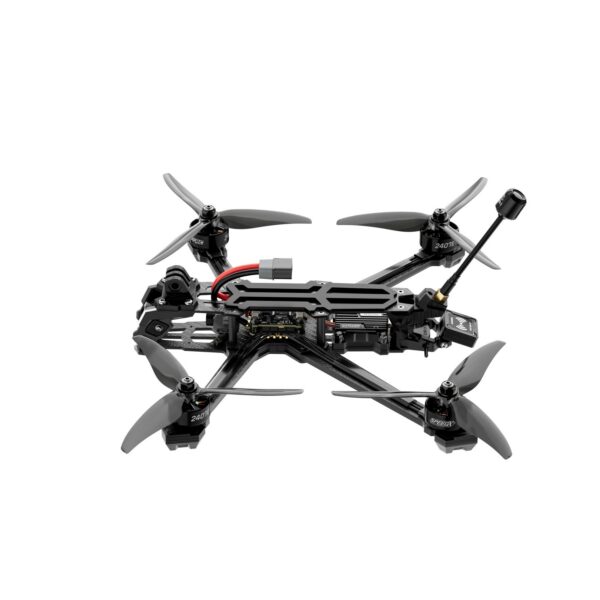
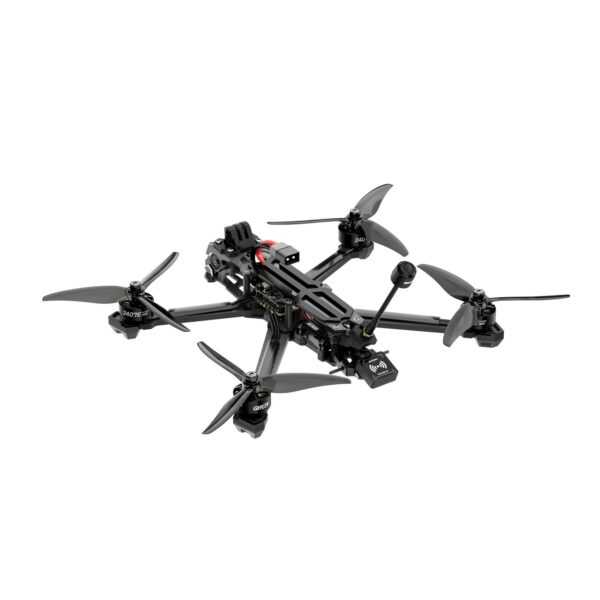
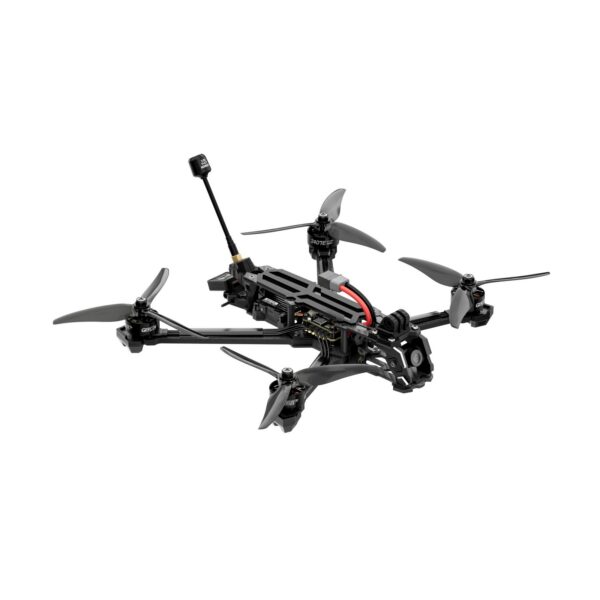
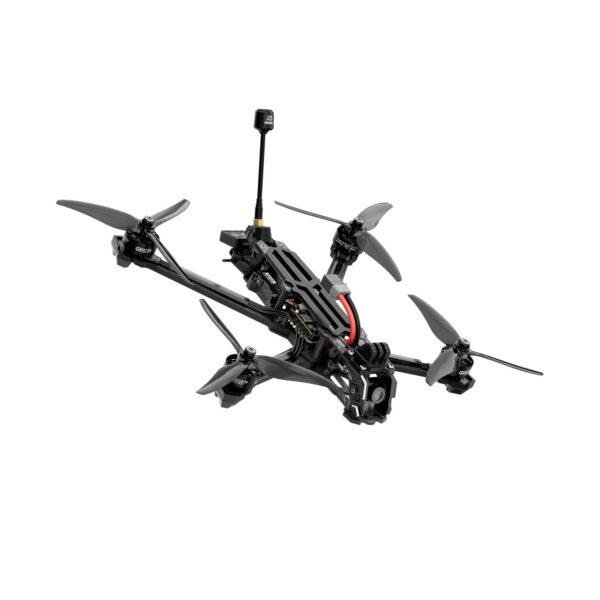
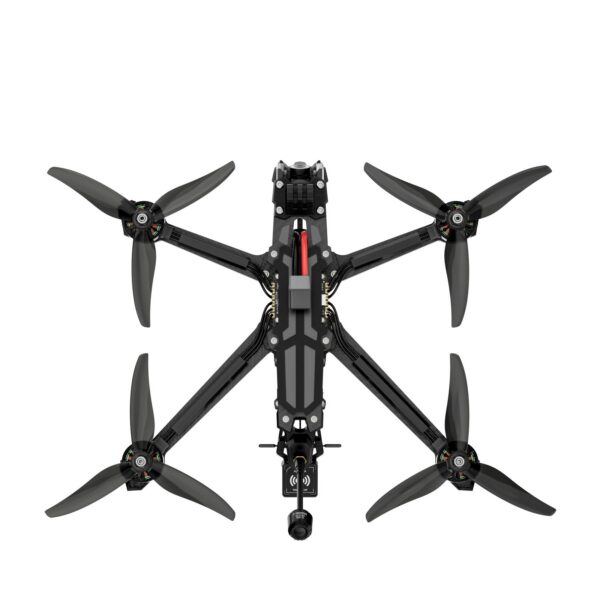
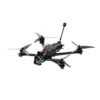
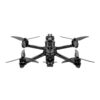
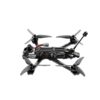
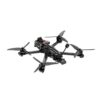
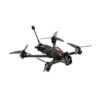
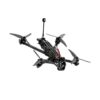
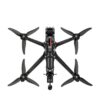


GEPRC Vapor-D6 Analog ELRS 2.4/868 Gemini receiver
299.00 €
-
In the box:
-
GEPRC Vapor-D6 Analog
-
2 x HQprop 6X3.5X3 propellers
-
2 x Battery anti-slip pads
-
Spare screw pack
-
2 x M20*250mm battery straps
-
L-shaped screwdriver 1.5mm
-
L-shaped screwdriver 2.0mm
-
GoPro mount
Shipping
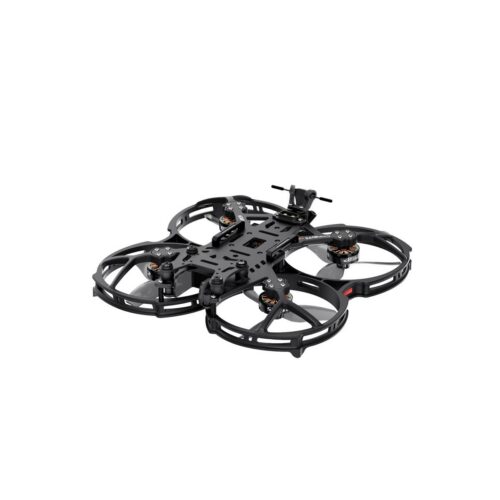
GEPRC Vapor-D6 Analog ELRS 2.4/868 Gemini is a capable 6-inch FPV drone designed for longer flights, smooth cinematic footage, and reliable analog FPV operation.
The Vapor-D6 frame features a DeadCat-style design that helps keep the propellers out of the camera’s field of view, allowing for cleaner and more unobstructed footage.
The configuration with an ELRS Gemini 2.4/868 receiver provides an advanced dual-band radio link solution designed to improve connection stability and interference resistance in more demanding flight conditions. GEPRC Gemini technology supports simultaneous use of the 2.4 GHz and sub-GHz frequency bands when paired with a compatible dual-band transmitter module.
The 6-inch Vapor-D6 platform is well suited for achieving longer flight times and stable flight characteristics, making it an excellent choice for FPV pilots looking for a durable and versatile solution for cinematic and long-range-style flying.
GEPRC Vapor-D6 Analog ELRS 2.4/868 Gemini – Powerful 6-Inch FPV Drone for Cinematic Flights and Longer-Range Missions
GEPRC Vapor-D6 Analog ELRS 2.4/868 Gemini is a high-performance 6-inch FPV drone that combines a DeadCat frame optimized for cinematic flying, a powerful analog video system, and an advanced ExpressLRS Gemini control link. The Vapor-D6 platform is designed for pilots who value stable flight characteristics, smooth trajectories, good efficiency, and the ability to capture clean FPV footage with minimal propeller visibility in the camera’s field of view.
A key characteristic of the GEPRC Vapor-D series is its DC, or DeadCat-style, frame geometry. According to the manufacturer, this design preserves the flight feel associated with a Wide-X layout while positioning the front propellers so that they remain outside the camera’s field of view. The Vapor-D6 frame features a 274.6 mm wheelbase, 5 mm thick carbon-fiber arms, and support for 6-inch propellers.
GEPRC Vapor-D6 Analog ELRS 2.4/868 Gemini is well suited for cinematic videography, landscape exploration, and longer FPV flights where predictable handling and a reliable control link are especially important.
6-Inch Platform for Smooth and Efficient FPV Flight
A 6-inch FPV platform offers an excellent balance between performance, stability, and efficiency. Compared with a typical 5-inch freestyle drone, the larger propellers allow the Vapor-D6 to be tuned more toward smooth trajectories and longer cinematic flights.
The GEPRC Vapor-D6 frame has a 274.6 mm wheelbase and is designed for 6-inch propellers. The top and middle plates are 2.0 mm thick, the bottom plate is 2.5 mm thick, and the motor arms are 5.0 mm thick. According to the manufacturer, the frame itself weighs approximately 203.8 grams.
This construction provides a strong foundation for a larger 6-inch FPV drone, making it particularly suitable for pilots who prioritize stability and smoothness alongside high-performance freestyle capability.
DeadCat Frame Keeps Propellers Out of the Camera View
One of the most important advantages of the GEPRC Vapor-D6 Analog ELRS 2.4/868 Gemini is its Vapor-D6 DeadCat frame. With a traditional X-shaped FPV frame, the front propellers may appear in the image when using a wide-angle camera, which can be distracting in cinematic footage.
GEPRC designed the Vapor-D frame specifically to move the propellers out of the camera’s field of view while maintaining flight characteristics similar to a Wide-X frame. A cleaner camera view is one of the key advantages highlighted for the Vapor-D platform.
This makes the Vapor-D6 particularly appealing to videographers who want to capture long, smooth FPV sequences while reducing the need to crop out or digitally remove propellers during post-production.
Analog Video for a Low-Latency FPV Experience
The Analog designation refers to the use of a traditional analog FPV video system. One of the main advantages of analog FPV is its very low latency, which is why it remains popular among freestyle pilots and other experienced FPV users.
Analog FPV provides a direct and responsive connection between the drone’s movement and what the pilot sees in the goggles. As the video link weakens, interference typically appears gradually in the image, allowing experienced pilots to visually assess link quality and adjust their flight path accordingly.
While analog video does not provide the same image quality as modern digital FPV systems, it remains a strong choice for pilots who prioritize minimal latency, simplicity, and broad compatibility with analog FPV equipment.
Powerful Analog Video System
GEPRC uses high-power FPV video systems across its Vapor-series analog platforms. Comparable configurations in the same product family use a MATEN 5.8G 1.6W VTX, a Caddx FPV camera, and a GEPRC Momoda2 5.8 GHz RHCP antenna.
This type of analog video architecture is designed for pilots who want the immediate response of a traditional analog system combined with compatibility across a wide range of analog goggles and video receivers.
The exact VTX and camera configuration of a specific Vapor-D6 production version should still be confirmed before purchase, as component combinations may vary between revisions.
ELRS 2.4/868 Gemini – Advanced Control Link
One of the defining features of the GEPRC Vapor-D6 Analog ELRS 2.4/868 Gemini configuration is its ExpressLRS-based Gemini receiver system. ExpressLRS is a widely used open-source FPV control protocol designed to provide low latency, high packet rates, and reliable long-range radio communication.
GEPRC offers ELRS receiver solutions for both 2.4 GHz and the 868 MHz sub-GHz band used in Europe. Depending on the specific receiver model and configuration, ExpressLRS systems can support high update rates and advanced telemetry functionality.
The Gemini-type solution is designed to improve link reliability by using multiple radio links. In practice, the purpose is to reduce the impact that a single frequency band, antenna orientation, or source of radio interference can have on the overall control connection.
Advantages of 2.4 GHz and 868 MHz Frequency Bands
2.4 GHz ELRS is highly popular in FPV because of its low latency, compact antennas, and excellent overall performance. The lower 868 MHz band provides different radio propagation characteristics and is commonly used as a sub-GHz ELRS frequency in European applications.
The concept behind the Gemini configuration is to use these communication options in a way that improves radio-link redundancy and stability. This is particularly attractive on a larger 6-inch FPV platform, which may often be flown on broader and longer trajectories than smaller freestyle or cinewhoop models.
To take full advantage of the system, the pilot’s radio transmitter or external ELRS module must also support the corresponding Gemini configuration and frequency bands.
Strong Carbon-Fiber Construction
The Vapor-D6 is built around a carbon-fiber frame designed to withstand demanding FPV use. GEPRC uses 5 mm thick motor arms, while the main structural plates range from 2.0 to 2.5 mm in thickness.
The thick carbon-fiber arms help maintain structural rigidity when using larger 6-inch propellers and powerful motors. A rigid frame is important in FPV because unwanted flex and resonance can affect gyro measurements and make flight-controller tuning more difficult.
GEPRC also uses CNC-machined aluminum protection around the camera area and a reinforced front section designed to help protect the FPV camera during impacts.
Powerful 6S Propulsion System
GEPRC’s 6-inch Vapor platforms use a powerful propulsion system designed around 6S LiPo batteries. Comparable Vapor configurations use GEPRC SPEEDX2 2407E 1750KV motors, HQProp 6×3.5×3 propellers, and a 60 A 4-in-1 ESC. A 6S LiPo battery in the 1550–2200 mAh range is typically recommended.
The purpose of a 6-inch propulsion system is not simply to achieve high maximum speed. Larger motors and propellers provide greater thrust reserve for smooth climbs, fast direction changes, and carrying additional payload.
This is especially useful when flying with an action camera, as cinematic FPV setups often carry a separate GoPro or similar recording camera.
Smooth Flight Characteristics for Cinematic Videography
The Vapor-D6 is more than simply an enlarged freestyle drone. Its frame geometry and 6-inch propeller system make it particularly suitable for long, flowing flight paths.
This style of flying works well for landscapes, vehicles, sports, real estate, tourism locations, and other dynamic scenes. Pilots can combine the free movement of an FPV drone with flight paths that would be difficult or impossible to achieve using a conventional stabilized camera drone.
The DeadCat geometry adds an important advantage here because it is specifically designed to keep the propellers out of the camera image.
Serviceable Design for Active FPV Pilots
For FPV drones, serviceability is just as important as performance. Propellers, motors, and frame arms are all components that may eventually require replacement after intensive use.
The Vapor-D frame is designed with maintenance and assembly in mind. It supports standard mounting patterns including 20 × 20 mm and 30.5 × 30.5 mm for the flight controller, while VTX mounting options include 20 × 20 mm, 25 × 25 mm, and 30.5 × 30.5 mm. Camera mounting supports 19 or 20 mm formats.
This makes the platform practical for long-term ownership because components can be maintained, replaced, and upgraded when required.
Designed for Experienced FPV Pilots
GEPRC Vapor-D6 Analog ELRS 2.4/868 Gemini is primarily a performance-focused FPV drone. It is not an automated camera drone in the style of DJI consumer aircraft, where flight stabilization, positioning, and obstacle avoidance are handled to a large extent automatically.
FPV drones require the pilot to understand manual flight control, and flying in Acro mode in particular takes practice. Before flying a real aircraft, it is strongly recommended to develop the necessary control skills in an FPV simulator.
In experienced hands, however, the Vapor-D6 offers a significantly freer flying experience and enables flight paths that would be difficult or impossible with a conventional stabilized camera drone.
Technical Characteristics
GEPRC Vapor-D6 Analog ELRS 2.4/868 Gemini is based on the 6-inch GEP-Vapor-D6 platform with a wheelbase of 274.6 mm. The top and middle plates are 2.0 mm thick, the bottom plate is 2.5 mm thick, and the motor arms are 5.0 mm thick. The Vapor-D6 frame is manufactured from high-strength carbon fiber and weighs approximately 203.8 ± 2 grams. Motor mounting is 16 × 16 mm, and the platform is designed for 6-inch propellers.
The same generation of GEPRC 6-inch Vapor analog platforms uses the GEP-F722-HD V2 flight controller with an STM32F722 processor, ICM42688-P gyro, BMP280 barometer, and Betaflight OSD. Comparable analog configurations use a TAKER H60_BLS 60A 4-in-1 ESC, SPEEDX2 2407E 1750KV motors, HQProp 6×3.5×3 propellers, and 6S LiPo batteries in the 1550–2200 mAh range. The exact electronic component set of a specific Vapor-D6 Analog ELRS 2.4/868 Gemini production version should still be verified before publication or purchase, as the complete specification of this particular configuration may vary by revision.
Analog FPV and Gemini ELRS – A Performance-Focused Combination
Combining analog video with a modern ExpressLRS control link creates an appealing configuration for pilots who prefer very low-latency FPV video while still wanting a contemporary and reliable radio-control platform.
Analog FPV provides immediate visual feedback, while ExpressLRS offers fast and efficient control communication. The Gemini configuration takes this concept further by focusing on situations where radio-link stability and redundancy are especially important.
This makes the combination particularly suitable for pilots who value responsive flight control and a robust control link while continuing to use analog FPV goggles and video equipment.
Why Choose GEPRC Vapor-D6 Analog ELRS 2.4/868 Gemini?
GEPRC Vapor-D6 Analog ELRS 2.4/868 Gemini is a strong choice for FPV pilots looking for a 6-inch platform for cinematic flying, longer flight paths, and smooth video capture. The Vapor-D6 DeadCat frame geometry helps keep propellers out of the camera’s field of view, the robust 5 mm carbon-fiber motor arms provide the rigidity required for a powerful 6-inch setup, and the 274.6 mm wheelbase creates a stable foundation for the propulsion system.
The analog FPV system provides an immediate, very low-latency flying experience, while the ELRS 2.4/868 Gemini configuration is aimed at more demanding pilots who place particular importance on control-link reliability.
If you are looking for a powerful 6-inch cinematic FPV platform that combines classic analog video, modern ExpressLRS control, and a DeadCat frame optimized for a clean camera view, the GEPRC Vapor-D6 Analog ELRS 2.4/868 Gemini is a versatile and performance-oriented choice.
View more FPV drones here.
| Raam | GEP-Vapor-D6 |
|---|---|
| Teljevahe | 274,60 mm |
| Ülemine plaat | 2,0 mm |
| Keskmine plaat | 2,0 mm |
| Alumine plaat | 2,5 mm |
| FC | GEP-F722-HD V2 |
| MCU | STM32F722 |
| Güro | ICM42688-P (SPI) |
| Baromeeter | BMP280 |
| OSD | Betaflight OSD koos AT7456E-ga |
| ESC | TAKER H60_BLS 60A 4-in-1 ESC |
| VTX | MATEN 5.8G 1.6W VTX |
| Camera | Caddx H1 |
| Antenn | GEPRC Momoda2 5.8G RHCP SMA 90 mm |
| Pistik | XT60 |
| Kaal | U 460 g ± 5 g |
| Lennuaeg | Umbes 13–17 minutit |
Related products

BetaFPV Meteor75 Pro II Whoop Quadcopter ELRS (with O4 Wide)

BetaFPV Meteor65 Pro Whoop Quadcopter ELRS (w/o O4)