

Unitree robots have arrived in the Baltics. Just a few years ago, humanoid robots and robot dogs that could move independently seemed more like science fiction. Today, you can buy, programme and use them at home, in schools, in businesses and in industry.
The first Unitree robots are now at the Meridein Robotics demo park in Estonia, where you can see them in person and try them out.
Meridein Grupp is the official partner of Unitree Robotics in Estonia, Latvia and Lithuania. Our goal is to make rapidly advancing robotics technology accessible to people and businesses across the Baltics, with local demonstrations, advice, setup, training and technical support.
Unitree is one of the world’s best-known manufacturers of humanoid and quadruped robots. According to the manufacturer, more than 5,500 humanoid robots were delivered in 2025, while total sales of quadruped robots have exceeded 30,000 units.
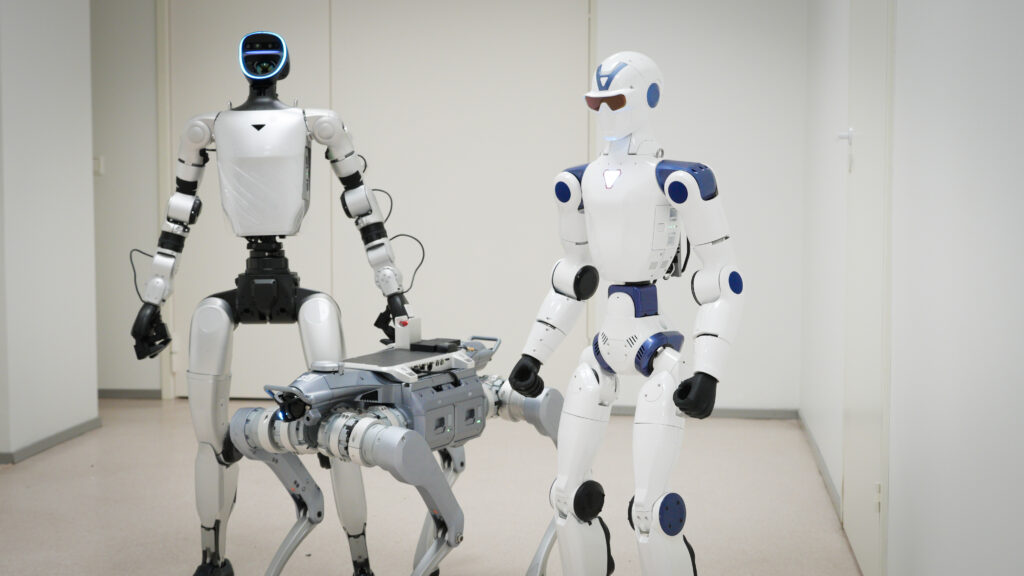
Our initial demo selection features four very different robots: the Unitree G1 and R1 humanoid robots and the Unitree Go2 and A2 robot dogs.
What are Unitree robots used for?
The simplest answer is: a robot can perform tasks that a person does not want to, should not have to or cannot keep doing continuously.
However, a robot’s task does not always have to be a major industrial process. Unitree robots are also suitable for learning, programming, entertainment and experimenting with new technologies.
Unitree robots can be used, for example:
- to teach programming and robotics in schools;
- to welcome visitors at trade shows and events;
- to introduce a company or exhibition;
- to inspect equipment in factories and warehouses;
- in places where working is uncomfortable or dangerous for people;
- to carry cameras, thermal cameras and other sensors;
- to develop AI and automation solutions.
You can think of a robot a little like a computer. The device itself is just a platform — what the robot can ultimately do depends on the software, additional equipment and the user’s needs.
Which Unitree robots are available in Estonia?
Unitree G1 — a humanoid robot for development and businesses
Unitree G1 is a humanoid robot approximately 1.3 metres tall. It walks, moves its arms, dances and can perform complex movements.
A major advantage of humanoid robots is that our physical environment is already built for people. Doors, corridors, stairs, tables, shelves and tools are designed around human dimensions. Humanoid robots are being developed so that, in the future, they can work in the same spaces and use the same environments.
Unitree G1 is suitable, for example:
- for universities and research institutions;
- for learning programming and AI;
- for trade shows and events;
- as a robot representative for a company;
- for testing production tasks;
- for remote-control projects;
- for developing automation.
G1 is not just a tool for large companies. Individuals can also buy one if they want to experiment with humanoid robotics or develop their own technology projects.
What makes G1 particularly interesting to us is that the solution can be adapted to the customer’s needs. For one customer, it could become a trade show robot; for another, a teaching tool; and for a third, a platform for testing future production tasks.
Unitree R1 — a more compact humanoid robot
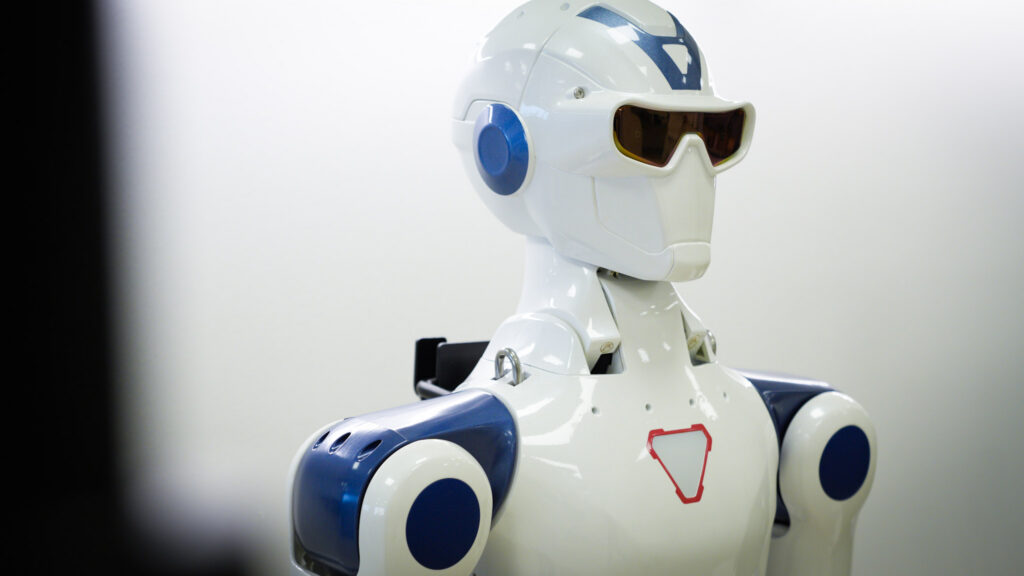
Unitree R1 is a smaller and more compact humanoid robot than G1.
While G1 is often considered for development and production, R1 could be an interesting solution for schools, visitor centres, trade shows, businesses and people who want to experiment with a humanoid robot that can interact with them.
R1 could, for example:
- welcome visitors;
- talk about a company or exhibition;
- answer recurring questions;
- serve as a teaching tool for programming and AI;
- take part in events and presentations.
R1 could also be an option for an individual who wants to experiment with a humanoid robot at home.
Not all functions are automatically included. For example, to hold a conversation in Estonian, the robot needs to be connected to speech recognition, AI and speech synthesis systems. This is where local software development and integration become important.
Unitree Go2 — a robot dog that makes it easy to get started
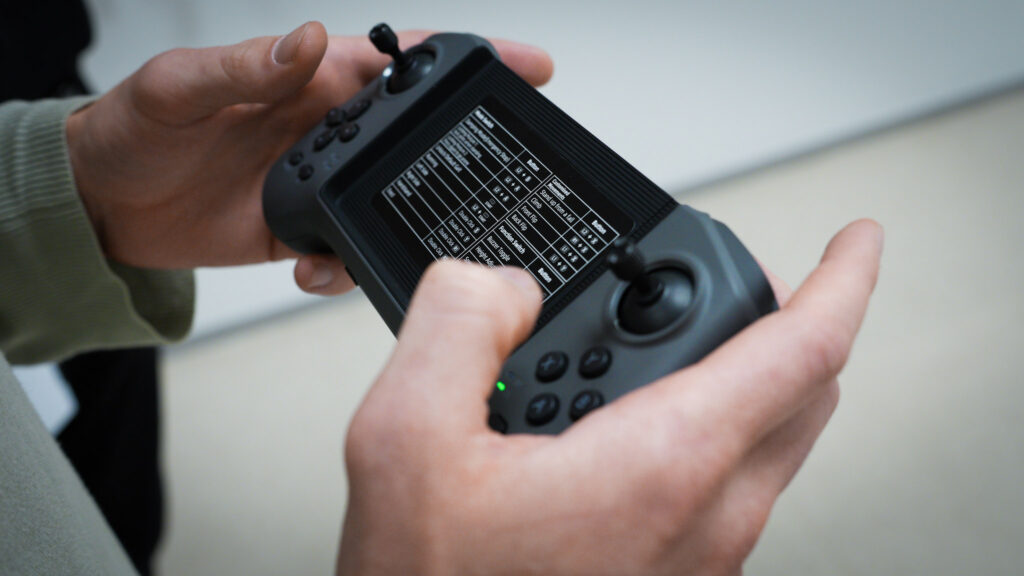
Unitree Go2 is a quadruped robot dog weighing approximately 15 kilograms. It walks, runs, turns, moves over uneven ground and senses its surroundings using sensors.
Standard versions move at up to 3.5 m/s, while the development version reaches approximately 5 m/s.
Go2 is not intended only for businesses or research institutions. It can also be used at home.
For a technology enthusiast, Go2 could be:
- a robot companion;
- a programming platform;
- a learning tool;
- an exceptionally exciting technology product;
- a foundation for developing a robotics project.
Unitree Go2 is also well suited to schools, universities, robotics clubs, business demonstrations and various events.
The basic Go2 version can be used as it comes. Development versions let you go much further and teach the robot your own functions.
One person may simply want a robot dog at home, another may want to learn programming with it, and a third may want to build an entirely new technology solution on top of it.
Unitree A2 — an industrial robot dog built for work
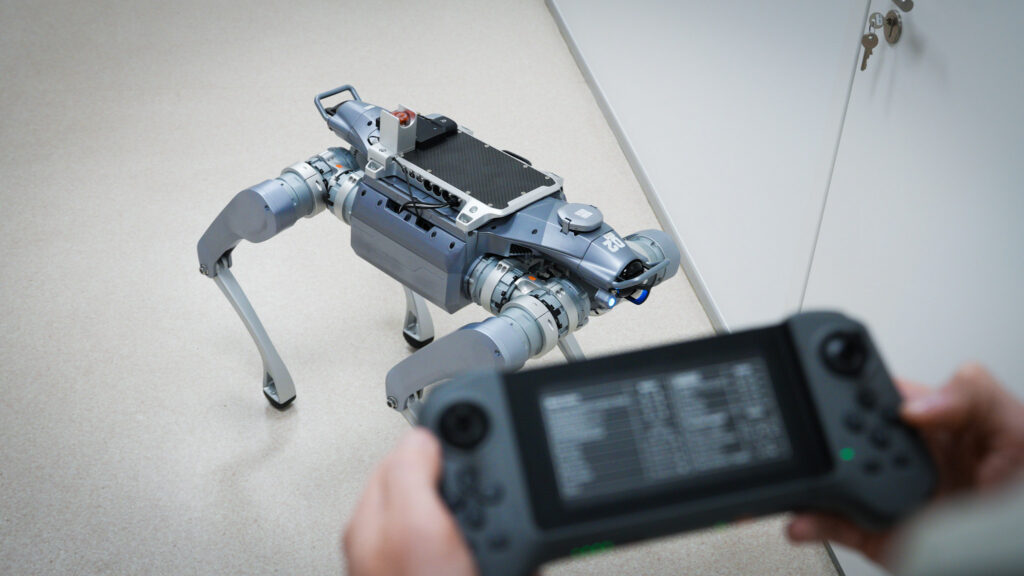
While Go2 is well suited to home use, learning and development, Unitree A2 is firmly an industrial work robot.
A2 weighs approximately 37 kilograms and can carry up to 25 kilograms of additional equipment while walking.
The robot can be fitted with, for example:
- cameras;
- thermal cameras;
- measuring equipment;
- gas sensors;
- other sensors.
A2 can regularly follow the same inspection route in a factory, at an energy facility, across warehouse grounds or in another large area, collecting images and measurement data.
If the system detects, for example, a higher-than-normal temperature, an obstacle or another deviation, it can notify employees.
With A2, the main question is not how impressive it looks, but:
can the robot take on repetitive, tedious or dangerous work?
If a person currently has to walk through the same area several times a day just to carry out inspections, a robot can take over part of that activity. Meanwhile, the employee can focus on tasks where human attention and judgement are needed more.
Unitree robots at home, in schools and in businesses
When talking about robotics, it is easy to get the impression that it is a technology only for large-scale industry.
In reality, Unitree robot users can be very different.
For example:
- someone who wants a Go2 robot dog at home;
- a technology enthusiast who wants to programme robots themselves;
- a parent looking for something completely different;
- a school or university that wants to teach robotics using real devices;
- a business that wants an attention-grabbing humanoid robot for a trade show or office;
- an industrial company that wants to automate routine inspections.
This is why Meridein Robotics also takes a broad approach: from a robot dog at home to a complete industrial solution.
Why does a local partner matter when buying a Unitree robot?
Buying the robot alone may not be enough.
An individual may have questions such as:
- which model is right for me;
- what the different versions mean;
- how to get the robot running for the first time;
- what I can do with it;
- where to turn if a technical problem arises?
For a business, the questions become even more specific.
Will the robot fit into the existing work environment? Can the required sensor be fitted to it? Can the robot be connected to the company’s systems? Who will train the employees? Who will help if the solution does not work as needed?
Meridein Robotics provides local support for Unitree robots throughout the Baltics.
With us, you can:
- see and try Unitree robots before buying;
- choose a suitable model and configuration;
- order a robot as an individual or a business;
- get help with logistics and delivery;
- get help with getting started;
- receive training;
- receive technical support.
If a project requires dedicated software, an AI solution or integration, we bring in development partners as needed.
Explore the robotics selection in our online store.
Unitree robots are now here in the Baltics
The first important step has been taken: Unitree robots are physically here in the Baltics, and you can see and try them in person instead of only looking at pictures or videos.
Next, we want to introduce robots into an increasing variety of environments.
At home, a robot can be a new and exciting technology product.
At school, it can be a tool that helps young people learn programming, AI and future technologies.
In a business, a humanoid robot can welcome visitors or make a trade show stand more eye-catching.
In industry, a robot can help reduce the need to make the same inspection rounds every day.
You do not need to know the entire world of robotics before coming to us.
You can start with a question such as:
“I’d like a robot dog. What do you recommend?”
“We want to start teaching robotics to our students.”
“We have this task or idea — could a robot do it?”
From there, we can move forward together.
Frequently asked questions about Unitree robots
Are Unitree robots available in Estonia?
Yes. Meridein Grupp is the official partner of Unitree Robotics in Estonia, Latvia and Lithuania, and the first Unitree robots are at our demo park in Estonia.
Can I try Unitree robots before buying?
Yes. Soon, you will be able to see and try the robots with us before buying and discuss which model and version would suit you best.
Can an individual buy a Unitree robot?
Yes. The Unitree Go2 robot dog is also suitable for home use, while the G1 and R1 humanoid robots may suit a technology enthusiast or developer.
What is the difference between the Unitree Go2 and A2 robot dogs?
Go2 is a robot dog weighing approximately 15 kilograms, well suited to home use, schools and development.
A2 is an industrial robot dog weighing approximately 37 kilograms. It can carry up to 25 kilograms of additional equipment and is suitable, for example, for inspection rounds and measurements in factories, warehouses and other facilities.
Does a Unitree robot speak Estonian?
Not automatically. To hold a conversation in Estonian, the robot needs to be connected to speech recognition, AI and speech synthesis systems. If necessary, we can bring in development partners for such a solution.
Want to see a Unitree robot in person?
If you would like to know which Unitree robot would suit your home, school or business, get in touch with us.
Request a quote or book a demo:
robotics@meridein.ee
Meridein Robotics
Unitree Robotics Baltics
Estonia · Latvia · Lithuania