

A wireless microphone has long stopped being just a tool for videographers. Today, they are used by content creators, journalists, company marketers, vloggers and anyone who wants better audio when filming with a phone or camera without having to carry cables and bulky audio equipment.
Over the past few years, microphones have become smaller, smarter and much easier to use. At the same time, choosing one has become more complicated. DJI now offers several different generations, while brands such as Insta360 have entered the market with the goal of making audio recording just as simple as using their cameras.
So a natural question arises: which wireless microphone is a good buy in 2026, and which models are worth reconsidering now that newer generations offer more?
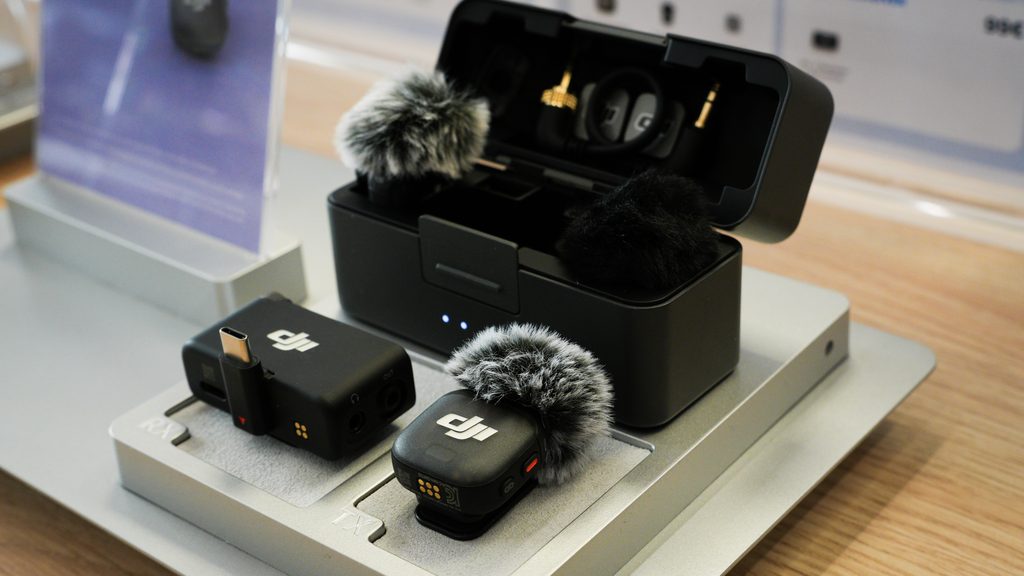
DJI Mic 3 – when the audio simply has to work
DJI Mic 3 is designed for users who see a microphone not just as a convenient accessory, but as a working tool. An Instagram video can usually be filmed again if necessary, but with an interview, event or client project, there may not be a second chance. This is where features that may seem excessive for everyday short-form content become important.
The strength of Mic 3 is not just its sound quality. Internal recording, 32-bit float, timecode and several other more professional features give you more security during recording. If the audio suddenly becomes too loud or there is a problem with the signal reaching the camera, it does not automatically mean that the entire take is ruined.
At the same time, DJI has managed to make the system smaller. The transmitters are compact, and the whole kit is designed so that more professional features do not necessarily mean carrying a large amount of extra equipment.
Does everyone need all of this? Definitely not. If you only use a microphone a couple of times a month for social media videos, some of Mic 3’s features will probably go unused. For interviews, events, video production or other work where re-recording audio is not easy, however, these additional capabilities become much more valuable.
Insta360 Mic Air – a small and simple solution for everyday filming
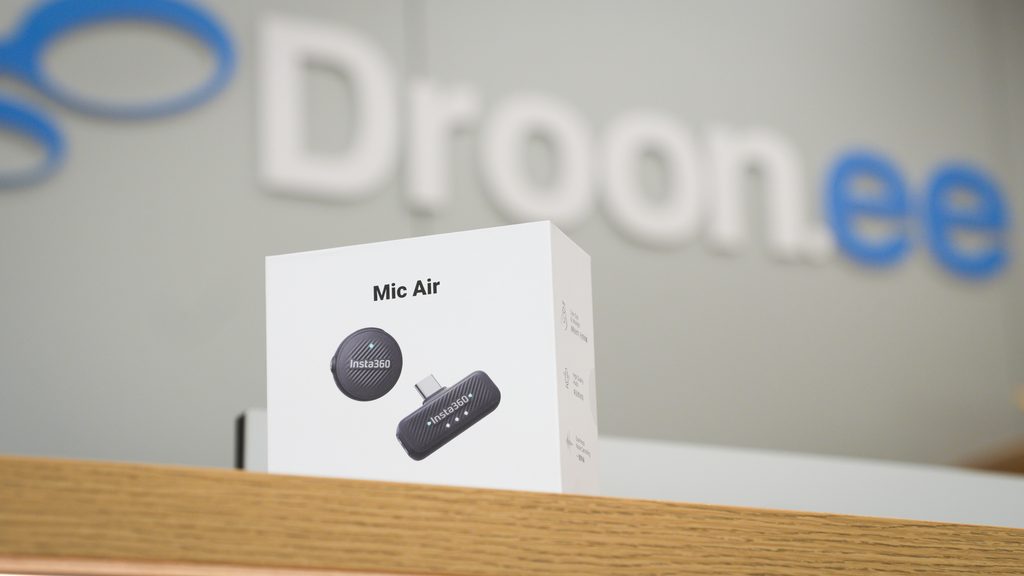
At the other end of the spectrum is the Insta360 Mic Air, built around a very simple idea: the microphone should do its job without requiring the user to think about it too much.
This is especially logical for someone who films with a phone or already uses Insta360 cameras. In that case, choosing a microphone does not necessarily come down to which model has the longest technical specification list. What may matter much more is how quickly the devices connect and how fast you can start recording.
Mic Air is well suited for travel, vlogging and social media content, where a large microphone kit would simply be unnecessary. The small transmitter is also an advantage on camera – the less visible the microphone is on clothing, the more natural the result looks.
Microphones like this show clearly how much audio equipment has changed in recent years. In the past, getting decent wireless audio often meant a fair amount of setup. Now everything is moving toward a model where the user simply attaches the microphone and starts recording.
DJI Mic 2 – is it still worth buying?
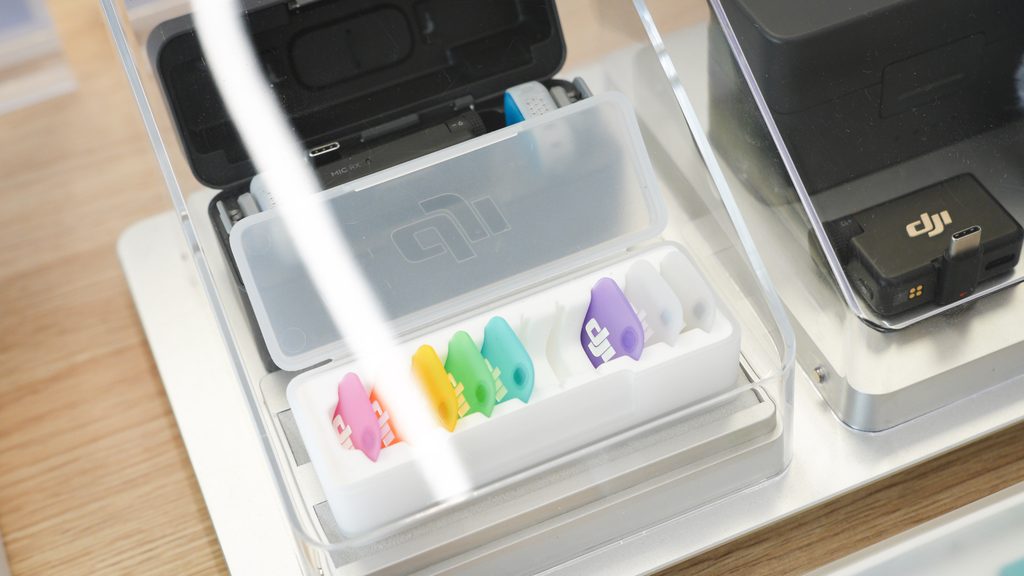
DJI Mic 2 is in an interesting position. It is far from being a bad microphone – quite the opposite, until recently it was one of the strongest wireless microphone systems in its class. The arrival of a new generation does not suddenly make the older model worse, but it does change how attractive Mic 2 feels next to newer options.
This happens often in technology: a product works just as well as before, but the same money can now buy more. With DJI Mic 2, a lot therefore depends on the price. It still offers 32-bit float internal recording, noise reduction and enough features to cover the needs of many users.
If Mic 2 is available at a noticeably lower price than Mic 3, it can be a very good way to get a capable wireless microphone without paying for the latest model. If the price difference is small, however, Mic 3 becomes the more logical choice.
So Mic 2 is not yesterday’s news. The real question is whether its price has adjusted to the arrival of the new generation.
Is the newest always the best?
With technology, a new model often automatically feels like the most attractive option, but choosing a microphone is not quite that simple. More features do not necessarily mean you will actually need all of them.
If you mainly film travel, everyday content or social media videos, a small microphone that is ready to use quickly may be much more convenient than a professional kit whose features you end up using only partially.
On the other hand, when recording an interview or client video, it is not very pleasant to discover that the feature you considered unnecessary at the time of purchase could have saved the shoot. Internal backup recording and 32-bit float may sound like technical buzzwords until something goes wrong during recording.
That is why it makes sense to start not with the question “which one is the newest?”, but rather “what am I actually going to use it for?”
Isn’t the phone microphone enough?
As phone cameras continue to improve, it is perfectly reasonable to ask whether a separate microphone is even necessary. In good conditions and when speaking close to the phone, the built-in microphone can provide a perfectly usable result.
The difference becomes clear when the person moves farther away from the camera, there is background noise or more than one person is being recorded. A phone records sound from where the phone is. A wireless microphone moves with the speaker, which means the voice remains more consistent even when the camera position changes.
And audio is one of those parts of a video where poor quality is often noticed faster than slightly weaker image quality. Beautiful 4K footage is difficult to enjoy if the speaker sounds distant and is mixed with wind, traffic and room echo.
An older model does not automatically mean a bad purchase
With new tech products, it is easy to get the impression that the previous generation becomes outdated overnight. With microphones, it is worth avoiding that trap.
Sound quality does not disappear just because a new model is released. If an older device still meets the user’s needs and its price has dropped enough, the previous generation can actually become a very sensible choice.
The problem only appears when the price difference between the old and new model is so small that you gain almost nothing by giving up the newer generation.
DJI Mic 2 is a very good example of that right now. It remains a capable microphone, but the closer its price gets to Mic 3, the harder it becomes to justify choosing the older model.
So which microphone should you choose?
If the goal is professional work, interviews, events or situations where a failed recording would be costly, DJI Mic 3 is the strongest option. Its advantage is not only sound quality, but also the features that provide more security during recording.
Insta360 Mic Air moves in the opposite direction. It is a good fit for someone who wants the smallest and simplest possible solution and prefers that the microphone does not turn filming into a separate technical project.
DJI Mic 2 sits between them as an older but still very capable system. With this model, price is the key factor – if you find a good deal, it can still be a very sensible purchase in 2026.
Wireless microphones have now developed to a point where many devices are already capable of delivering good audio. Because of that, the most important difference may no longer be which microphone sounds a few percent better under laboratory conditions.
What matters much more is whether you need professional safety nets, maximum simplicity or a good balance between price and features.
In the end, the best microphone may not be the one with the most functions. It is more likely the one that fits your camera, workflow and filming habits so well that you do not have to think about the microphone itself before every shoot.