
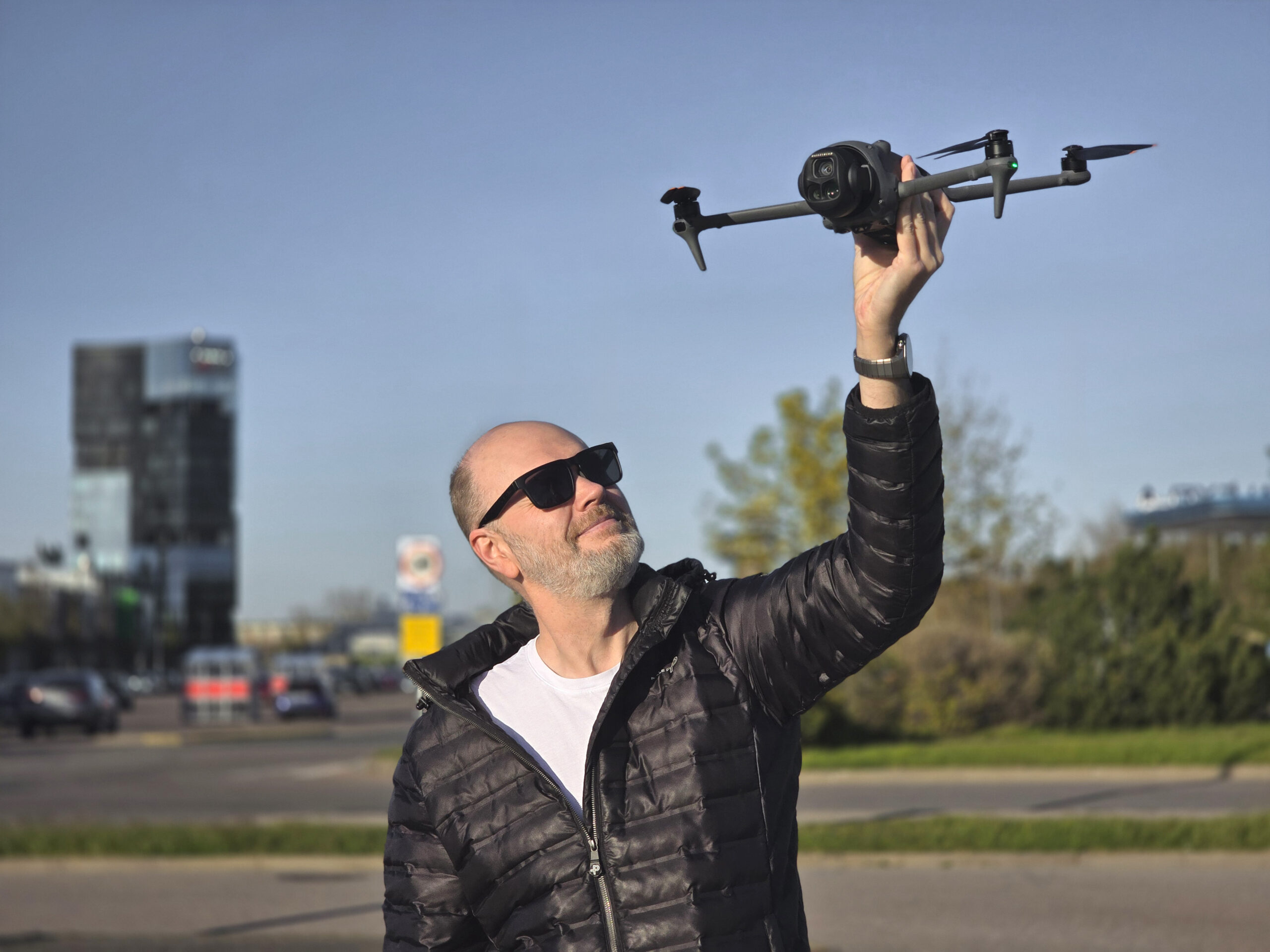
I’m going to review the Dji Mavic 4 Pro drone from a photographer’s point of view. To put it more or less simply, a new level of (photographic) drone is back on the market. It’s quite a step forward. I won’t go into the details of the drone itself, these reviews are probably all over YouTube at the time of reading this article. So the focus is on the cameras.
With the help of the lovely people at Droon.ee, I got my hands on the Mavic 4 Pro almost a week before its launch. For those who know me, it got me excited like a little boy and with good reason. It’s a Dji Mavic 4 Pro fly more combo kit, which in addition to the drone comes with RC 2 console, 3 batteries, charging hub, bag and a bunch of propellers.
Cameras
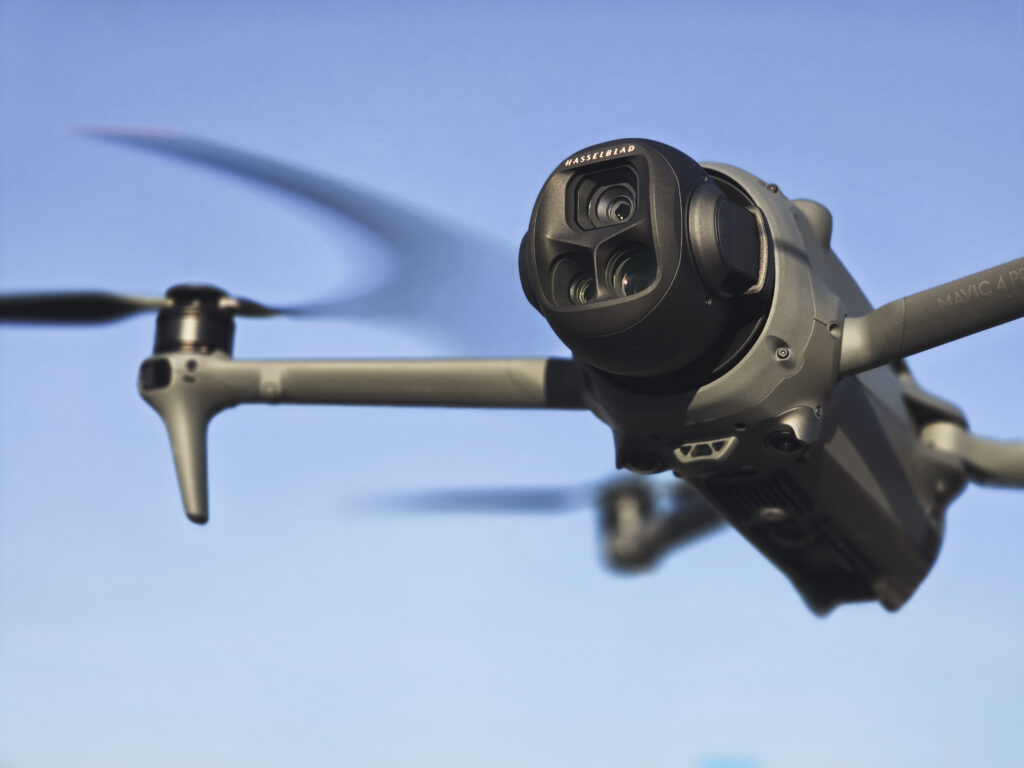
This time there are also 3 cameras on board – 28mm, 70mm and 168mm equivalents. All of them can now be used in 90′portrait mode. In this mode, however, the up-and-down rotation of the camera is much less – only 10′ in each direction. In fact, the gimbal rotates even more, to 450′ I think, and this can also be used for video. I didn’t start looking for it at the moment. When shooting wide angle, the camera also rotates barely more than necessary. All the way down and almost all the way up – as much as 70′ (M3 was 30′).

The older Mavic 3 Pro was like this with the cameras: the main camera was very good, the 70mm was quite good and the 166mm was a dud, as the colours were completely out of this world and the resolution was only 12 MP. I really couldn’t get it to work hardly ever. But I did get the 70mm.
This has now changed, as the cameras have much more similar images, although the sensor sizes have not changed. Again, there is some colour variation between the cameras (mostly at 70mm), but this is relatively easy to correct compared to the previous model. In places I also noticed that the autofocus was off, especially in the dark. Again, this will almost certainly get better with firmware updates.
There are a lot of megapixels. Perhaps too many for their sensor size, but you can always reduce the image if that’s a problem.
I already know that I will have to make all the presets new, because the camera dynamics and everything else will be different on the new drone.
Main camera 28mm

The Hasselblad logo on the 28mm main camera is noticeably narrower (the previous one was 24mm). I noticed this in a couple of typical places I’ve shot, and I couldn’t fit the same composition into the frame anymore because the trees were in front. It’s a bit of a shame, because there’s often nowhere to fall back to, but what can you do.
The main camera shoots at 100 megapixels (MP), which means DNG RAW files of over 100 MB, and up to 140 MB for forests with lots of fine detail. You can also shoot at 25 MP, which “binds” four pixels together into one, which should give better results, especially in the dark, with lower noise levels. This can of course be changed on the fly.
The aperture is now f2.0-f11, a stop whiter. I haven’t yet tested in depth at which aperture the sharpness is highest, usually it’s somewhere between f5.6-9. Whiter aperture = better chances in the dark. I can’t yet feel if the quality has changed significantly in the dark, because the Mavic 3 was also very good at this. Anyway, the image is soft and quite clean. I don’t usually go above ISO 200 myself, just to keep the detail clean. Needless to say, you will be using Lightroom’s AI noise reduction.

This brings me to perhaps the only noticeably negative point I can say about the M4: the 28mm has a 3:2 aspect ratio and the others a 4:3. This is not a good thing, as shooting with different lenses in the same series will produce images of different sizes. Why this is, I don’t know. Whether it’s a pre release issue, I don’t know either. If the main camera were to come in a 4:3 setting (which I personally prefer), it would be even narrower. Maybe 3:2 will then be added to the TV instead, that would be appreciated, there is room for cropping.
Pole 70mm

For the halves, there’s the kind of best that offers 2.5x magnification. It gives a different feel to the room, details the architecture and has been one of my favourites for the last few years. As mentioned, the telecams now have a more similar image to the main camera, so I’ll probably use more in the future.
The image will take 48 MP or 12 MP when bound. The aperture is fixed at f2.8.
Tele 168mm

Finally, the longer telephoto is now like a real camera you can actually use. It shoots 50 MP / 12.5 MP and the aperture is also f2.8, which is much whiter than before. The main thing, though, is that the image is no longer somewhat swampy in its colours. Finally!
It can be used to make some great parallax shots in video.
168mm parallax example: https://www.youtube.com/watch?v=0SW37Y1_h3c
Other
The Mavic 4 Pro is a little heavier and has a more chunky shape. It sits on top of 3 supports, which is surprisingly stable. The machine is very stable, especially on the gimbal, flies perfectly, I haven’t noticed the slightest anomalies.
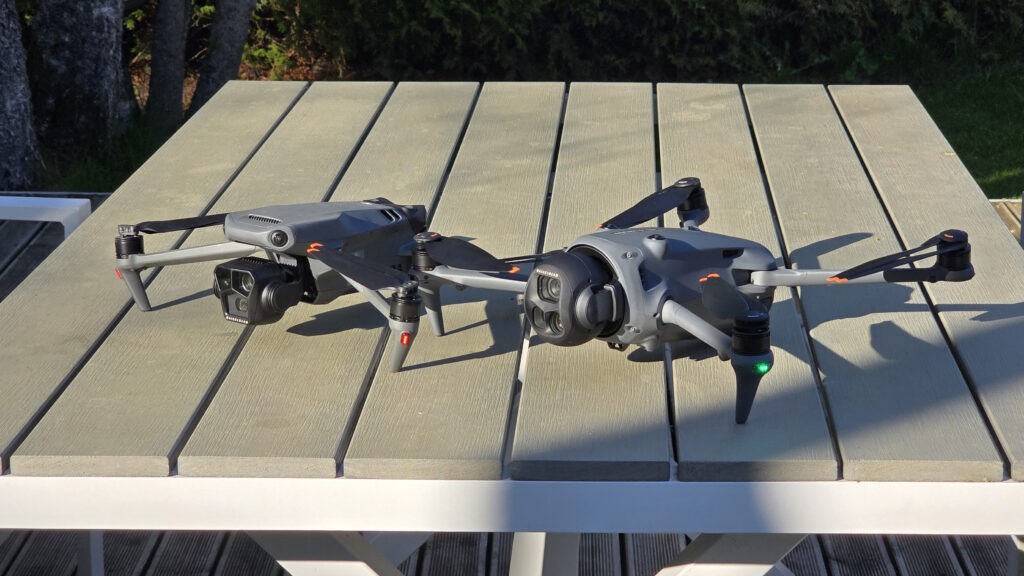
It comes with a Dji RC 2, which is a class lower than my previous RC Pro, but it’s lighter and with Ocusync 4 the coverage is still much better. The screen is very good, with brightness just slightly below the Pro series. In short, it does the job very well. The Dji RC Pro 2 also came out, but I haven’t had a chance to touch it yet.
This model also supports the 4G gadget (Dji Cellular Dongle 2) and it works wonderfully. Even though we have the necessary eye contact with the drone, there are still times when the signal breaks down. It doesn’t cut out when there is a bit of mobile coverage. The 4G dongle is not included, you have to buy it separately and it goes under the belly of the drone, you have to unscrew one of the covers from there. Simple.
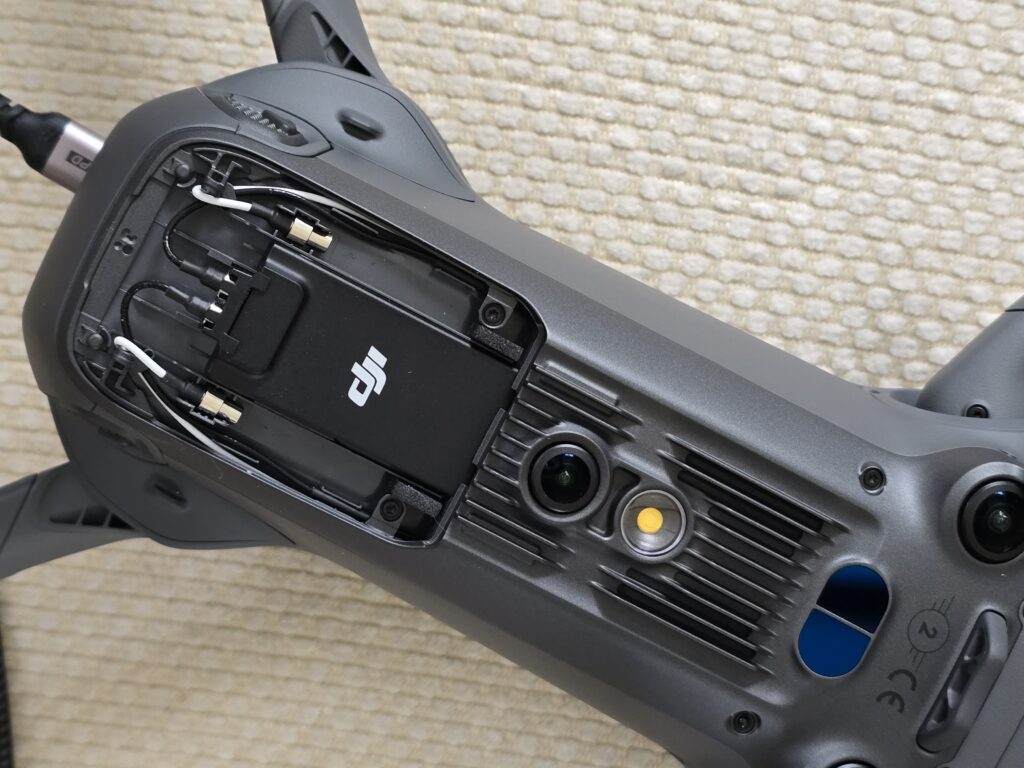
The Mavic 4 should be secured from all sides. There is a lidar on the front, at the end of the right arm. There are no more cameras on the side, there are under the belly and on the back, trying to create a viewable security in all directions. This can also be viewed directly from the screen on this model, so as not to bump into anything sideways. I had hoped that on this model these cameras would be of better quality, but I’d even say the opposite.
The battery lasts up to 51 min, in practice 35 min of real flight time when it starts beeping. Mavic 3 real flight time was somewhere between 27-28 min. Anyway, the difference is noticeable. The 3 socket hub is 100W. There should also be a 240W charger coming on the market that charges all 3 simultaneously.
I’m not a video expert, but I have some examples. The video looks very stable and smooth with a nice picture. It has D-log and the like on all cameras. For now, some of the video settings are still missing, so it doesn’t make much sense to get into it yet.
Sample night video: https://www.youtube.com/watch?v=_AMmIOjMmxo
To sum up
This review is honest and does not embellish anything. The Dji Mavic 4 Pro is really a great workhorse for me and a definite recommendation for all photographers. I believe for videographers too. All the cameras are now very good, higher resolution, portrait mode, battery lasts longer, lidar. Everything is just better and in some places significantly better.
Photos by Kaupo Kalda and Karin Kilp