
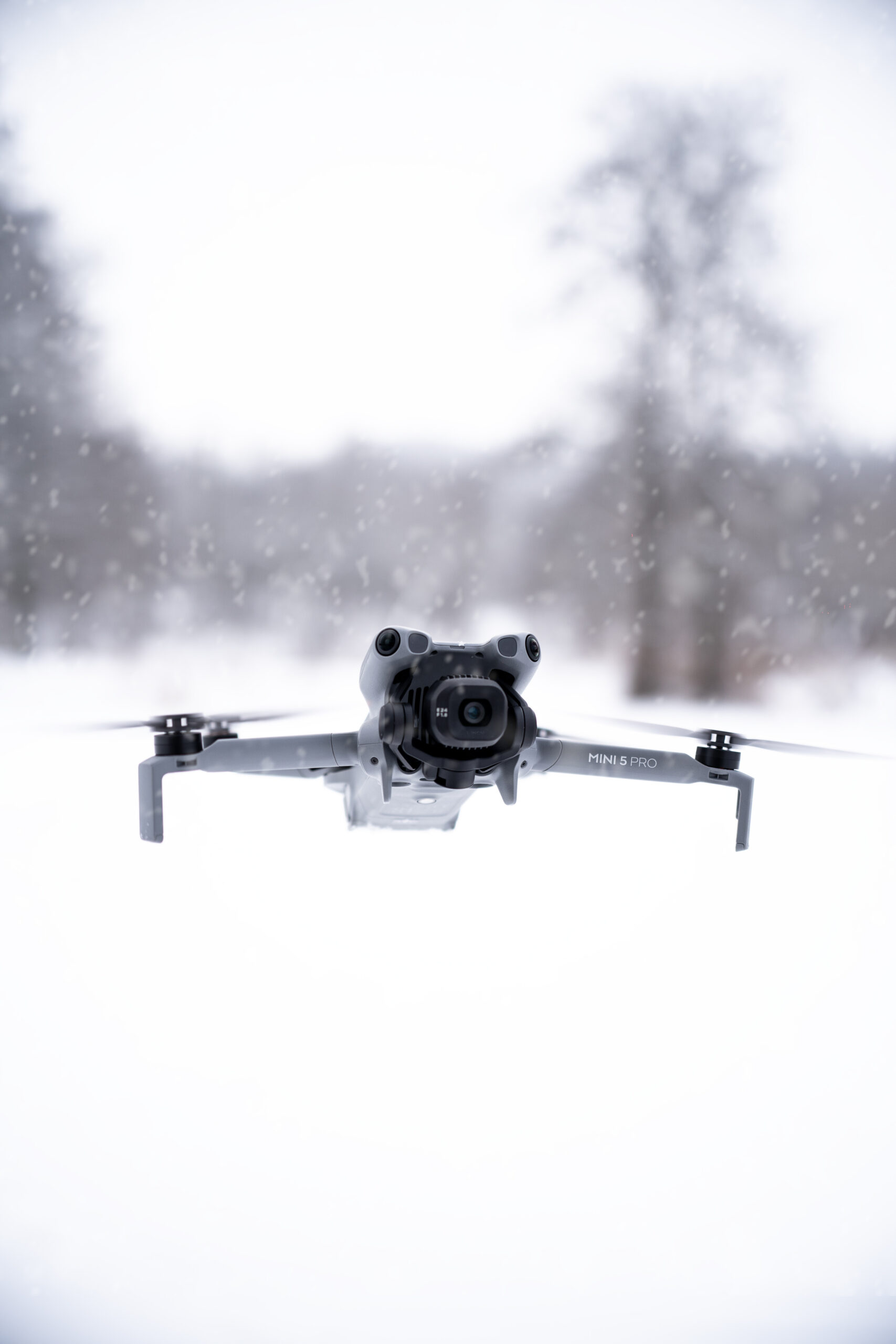
Winter does not mean a pause in drone flying. On the contrary, cold and clear air, snowy terrain and quieter airspace offer unique opportunities for both DJI drones and FPV flights. However, winter brings its own set of technical and physical challenges, and ignoring them can result in broken equipment or dangerous situations.
The most important factor in winter flying is the battery. The cold affects DJI smart batteries as well as FPV LiPo and Li-ion batteries. Low temperatures reduce the battery’s ability to deliver power, resulting in shorter flight times and a sharp drop in voltage. This is particularly noticeable in FPV, as high current draw can lead to sudden loss of power with a cold battery. It is therefore advisable to keep batteries warm before flight, e.g. in a pocket, bag or thermo box, and only use them just before take-off. Moderate, non-aggressive flying also helps to warm up the battery at the start of the flight.
The cold also affects the pilot himself. Manual precision is critical in FPV flying, and fingers that are stiff from the cold can significantly reduce control. Warm gloves, hand warmers, or even flying in a shady and windless place can provide significant extra comfort. Some drone pilots also fly from inside a car in winter – this is possible but requires awareness as it can reduce signal strength. It is also not easy to maintain the visual line-of-sight required for the open category.
The weather and the environment are treacherous in winter. Snow and fog reduce visibility and humidity is dangerous for electronics. For DJI drones, it’s worth paying particular attention to sensors and GPS signals, while for FPV drones, the cold makes the plastic and propellers more fragile – crashes that would end in a scratch in summer can end in broken parts in winter. It’s therefore wise to bring more spare propellers and avoid landing directly in the snow. A landing mat is not a luxury in winter, but a practical aid.
FPV flights also have the added problem of fogging of goggles in winter. The difference in temperature causes condensation, which can render the image unusable in an instant. Preheating goggles, switching them on before flight and avoiding sudden temperature changes can help reduce this risk.
Camera settings also need more attention in winter. Snowy terrain can trick the autofocus – both DJI drones and FPV cameras tend to leave the image too dark or greyish. For best results, shoot in RAW, where you can adjust the white balance with post-processing, and equip the drone with ND filters. These filters are like sunglasses in front of the camera lens, keeping out excess light when shooting in bright, low winter light.
After the flight, it is also important to think about maintenance. In winter, condensation occurs when a cold drone is quickly brought into a warm room. It is good practice to leave the drone and batteries in the bag for the time being and let them warm up slowly. For FPV drones, moisture protection (conformal coating) also helps to protect the electronics, but even then everything should be carefully dried after the flight.
To sum up
Winter drone flight is not difficult if you are aware of the effects of the cold on batteries, electronics and yourself. With the right preparation, a relaxed flying style and careful aftercare, you can fly safely in the winter and enjoy the kind of views and experiences you can’t get in the summer.
Winter is not a break in drone flying – it’s just a different season.