

Autumn is a time when many drone owners put their drones on the shelf to wait for the new season, but when they go flying in spring they discover that, oops, the batteries have run out. How can you prevent this situation and prolong the life of your LiPo batteries?

What to do before and during your flight?
- Always charge your battery before flying.
- Batteries should be used between -10 and 40 degrees (C). If the temperatures are lower, keep the battery in a warm place – for example in a breast pocket – before flying. And it’s a good idea to hover in one place for a minute or two before a long flight to allow the battery to warm up.
- Monitor the temperature of the battery when flying the drone in hotter than 40 degrees (C). If the battery temperature is higher than 65 degrees (C), bring the drone lower. If the battery temperature is above 70 degrees (C), it is already explosive and the flight should be terminated immediately for the health of the drone.
- First install the battery in the drone, then switch it on. Never switch on the battery before you attach the drone, or disconnect a working battery from the drone.
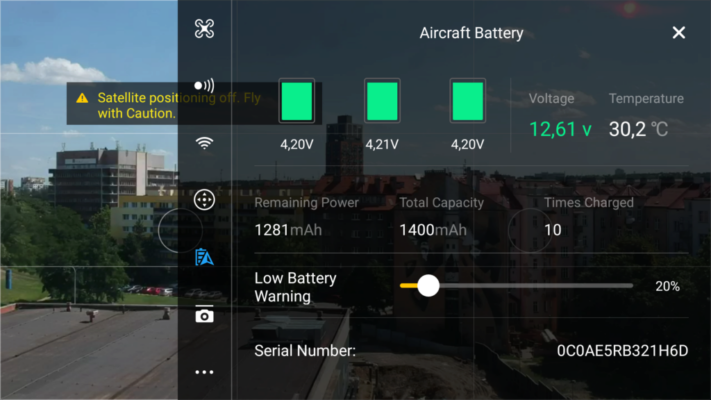
- Once you’ve got the drone up and running, be sure to check the battery status in the DJI app.
- Pay close attention to the warnings on the DJI app – the drone and the app will let you know if something is wrong.
How to store?
- The battery should be stored in a dry and rather cool place (22-28 degrees (C)).
- Do not store the battery near a hot source (oven, radiator, direct sunlight).
- Keep the battery away from damp places or direct water.
- Do not store or transport batteries with items such as eyeglasses, watches, necklaces or other metal items.
- DJI has intelligent batteries, which means they recharge themselves when they are not used for long periods. The app defaults to 10 days, which you can change yourself (1-10 days). The battery should be between 40% and 65%. Don’t let the battery get so low that it can’t be used afterwards (less than 10%). LiPo batteries cannot be recharged, so we recommend giving the battery a little boost for a while to keep it at the right level and last until the new season.
- If you need to board an aircraft with a battery or are taking another machine on a long journey – store batteries at 50% and preferably in a fireproof storage bag. During transport, make sure it is not crushed, thrown or otherwise damaged in any way.
- Charge your DJI battery only with an original DJI charger. Do not leave batteries unattended while charging. The ideal temperature for charging batteries is between 5 and 40 degrees Celsius (C). When the battery has finished charging and is 100% full, disconnect the battery charger from the battery.
Frequently asked questions:
- Why doesn’t the battery work after switching on? Make sure the battery is inserted correctly. There may be a poor connection between the drone and the battery. To turn on the batteries on DJI devices, press the button once and then hold it down until the power goes back on.
- Why does the DJI app (Go 4, FLY) report a battery warning? Make sure the battery is installed correctly.
- What are typical battery warnings?
- Overcurrent During Discharge. Do not fly the drone beyond its capabilities.
- High Discharging Temperature. The battery temperature is too high, the battery may automatically reduce its voltage to keep the battery running. In layman’s terms – flight time is reduced.
- Low Discharging Temperature. The battery temperature is too low, return the drone to the ground and replace the battery. Flying with an unserviceable battery is not recommended, we recommend taking the drone to the utility and replacing the battery.
- Should I preheat the battery when flying in winter? Yes. For example, put the battery in your back pocket.
Is it normal if the DJI intelligent flight battery is “swollen”? No, this is not normal. If the battery has become flat in the growth, it can slide off the side of the drone during flight, and that means an accident. Also, a swollen battery is flammable, we recommend disposing of it as soon as possible. - Why won’t the battery charge if it’s been left for a long time? The battery has discharged and therefore “died”. The battery can no longer be used, we recommend taking it to a utility.
If you have any questions, come and visit us at Villard 22, Tallinn or email info@droon.ee.