
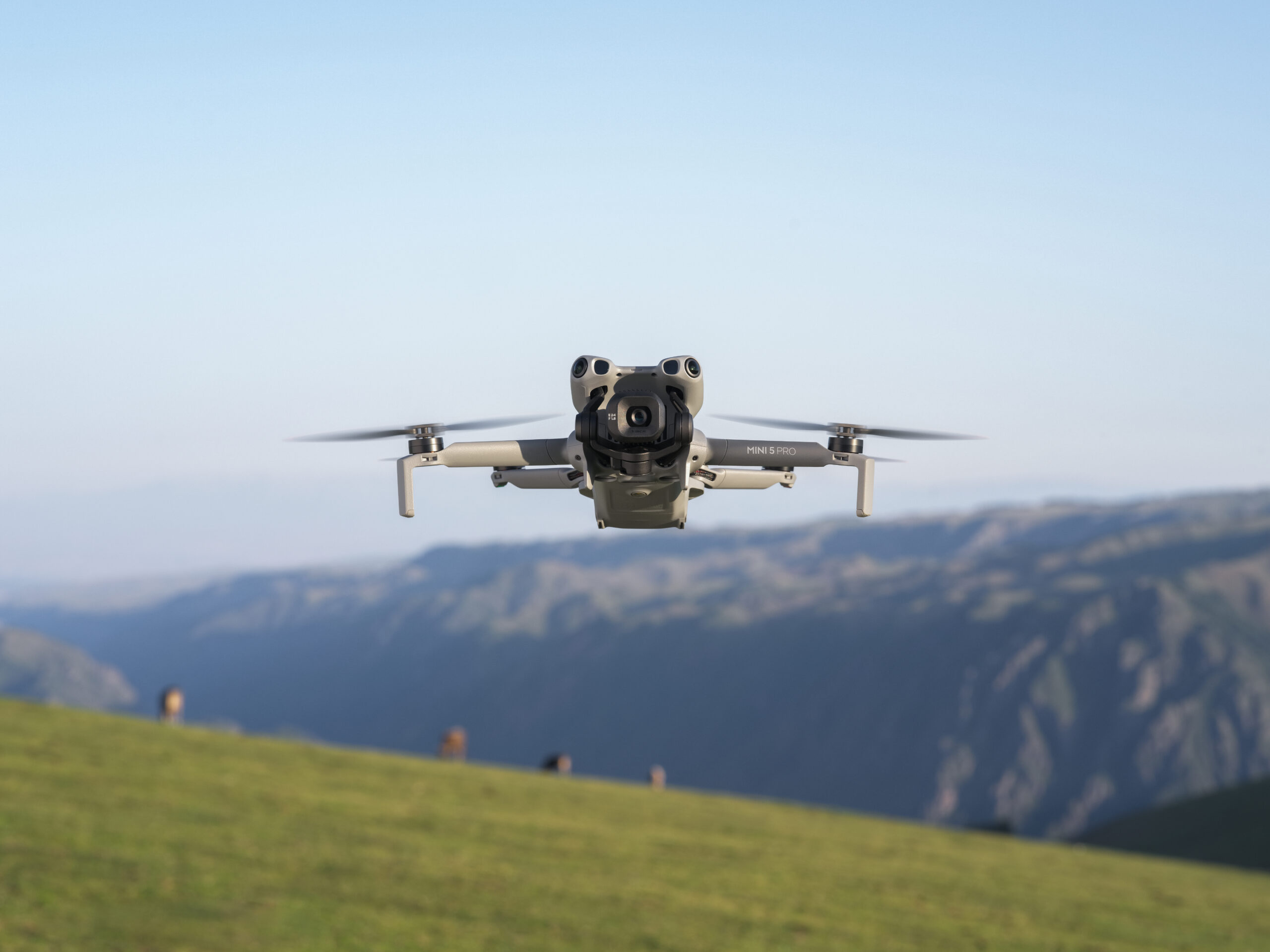
I’ve had a smaller drone from the Dji Mini Pro series for years for travelling, and the last time I used it was in the Caribbean. It’s small, light, very quiet and therefore legal in most of the modern world, unregistered to fly as it weighs just under 250g, which is usually the lower limit of the strictest rules.

Droon.ee kindly gave us a try of its latest model, the Dji Mini 5 Pro, which carries the C0 category marking and is subject to the A1 open category rules(read about it here). I’ll also include a link to sample files (RAW DNG and a couple of videos) at the end.
I still have a Mini 3 Pro model, two generations older. I was taking pictures with it on the island of Keri, because my own drone… crashed a bit in the rain (knock knock – don’t fly in heavy rain!). Very likely to upgrade now, although I don’t travel often, but it’s needed constantly as a backup drone.

Updates
The general things I’d like to talk about briefly here (youtube is full of them): longer flight time, more security sensors + lidar in front which is more accurate and can see in the dark, better signal coverage, better overall stability and wind resistance and very thankfully – 42 GB of internal memory, so you can forget the memory card in the future, intentionally or accidentally, it doesn’t matter. Dji drones are so damn good technically that there’s just not much to add. The fact that so many upgrades are packed into a non-existent 249g makes your jaw drop to the table, honestly.
Camera news: 1-inch 50MP sensor (wow, just like the Air), 225′ rotatable gimbal, 10-bit HDR video, much much better noise performance in the dark in both stills and video.
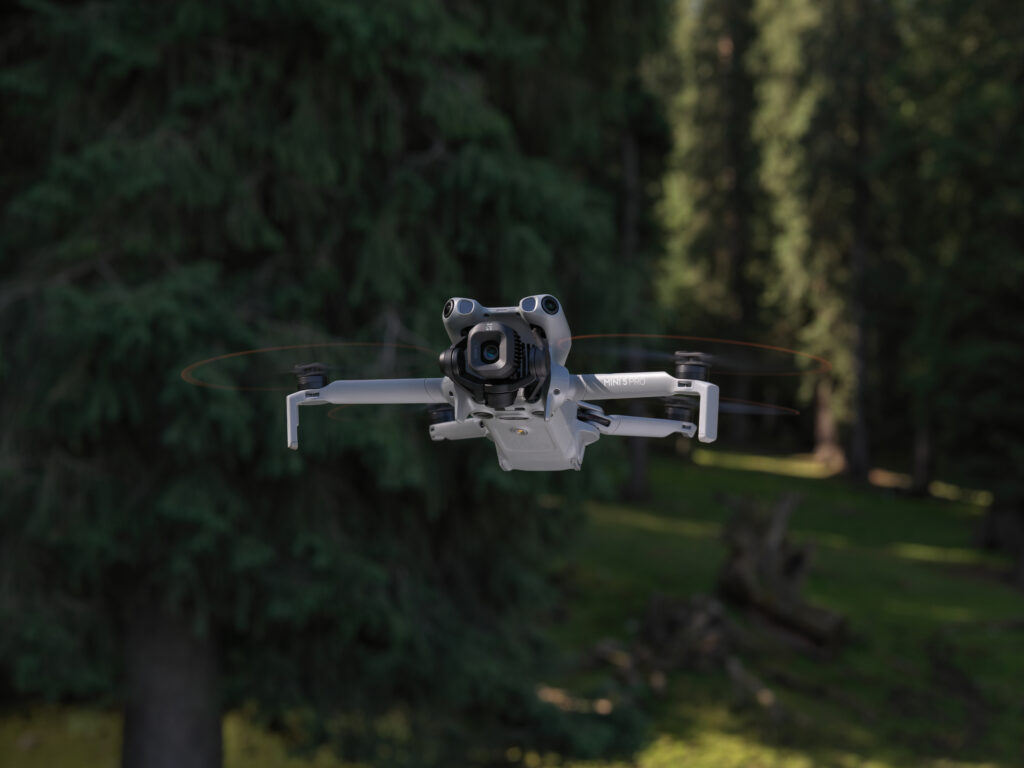
Let’s try the camera
Some pictures too. The Mini 5 Pro has one camera on board (the Air series has 2 and the Mavicul 3). The videos also include 2x lossless magnification because the sensor reso is high and the 4K image can be cropped for lossless playback. This definitely gives video content creators more room to manoeuvre.
The lens is a classic 24mm wide angle. The sensor is 50MP, but I took the pictures in 12MP mode – every 4 pixels are automatically “merged” into one strong one, resulting in the best possible quality. This is especially important in the dark, when the quality is very very good.
It takes pictures at 4:3, which is one of my favourite ratios.

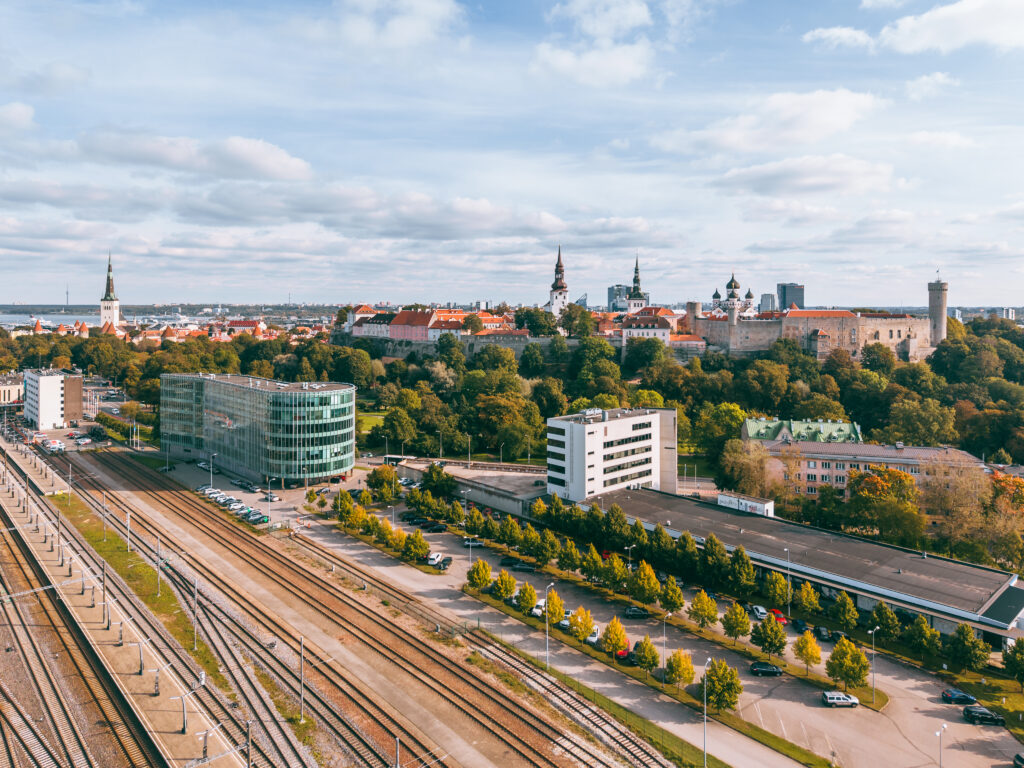
It’s not easy to make any noticeable difference in daytime images with stronger drones.

Night photography is always a challenge for cameras and the Mini 5 Pro is a great example. The inch sensor and very white f1.8 capture enough light from darkness and the dynamics are very good. It’s a head and shoulders above pro drones just a few years old. There’s a bit of a difference in dynamics with the Dji Mavic 4 Pro pro series drone, but that’s only logical.
The details are smooth and clean. I did apply a slight Lightroom AI-based noise reduction in processing, but this was mainly due to the subtle noise in the sky over a large area, and I could do without.
These pictures are processed and handwritten the way I process them. To each his own style. For those who are less familiar with image editing – below you can see an unprocessed vs processed screenshot:

To sum up
All I can say is that I’m getting it for my work as a backup drone, for places where I don’t dare-to-risk to fly a Mavic and for travel. I guess that’s my assessment.
Finally – rules for beginners
The Mini series will be the entry drone for many into the field, and will therefore go over the most important rules of drone flying.
First, the Transport video:
And, in their own words, the basic rules and principles:
- Don’t fly over airports, Estonia’s eastern border, military areas, government buildings or even very close to them. It is completely forbidden and extremely dangerous. Note that today most drones are visible to police and border guards from the moment they are switched on, both the console and the drone, its altitude and trajectory. Believe me, you will be quickly tracked down and checked to see who you are and what you recorded. I’ve had this happen to me on several occasions (I’ve flown several times while working near the borders of military areas) and it’s very understandable in today’s troubled Europe. Communication with the patrols on the ground has been polite and courteous. Whereby if you cross the prohibited boundaries, the drone is taken away for safekeeping and proceedings are initiated.
- Download the app “Estonian Drone Map” or google“drone map“. There you can see the controlled areas where restrictions apply. If there are several restrictions, the strictest applies. In addition, there may also be temporary restrictions (NOTAM), for example, if important foreign visitors are arriving in Tallinn, or similar.
- Do not exceed height limits. In Estonia, the maximum allowed altitude is 120m (this is the default altitude on the drone – please don’t change it) and in control areas, such as Tallinn, due to the proximity of the airport, 30-90m. Consider that you are sharing airspace with other aircraft and the rules must be strict for a reason. See these restrictions on the drone map or in the app.
- Don’t fly over people and especially the masses. This is also usually prohibited or restricted by NOTAM at major events. For example, at the Song and Dance Festival, where only a small team of experienced drones in constant contact with the police is allowed. Be very careful around people and ask the curious to stay away, as the propellers are moving at 7,000 rpm and are oh-so-scary if someone gets hit. Condini. Children in particular tend to get very close.
- Be sure to also read open category info on the Transport website.
- There is a group on Facebook Drone Club, where you can also look for advice and ask questions. A condition of joining is that you respect safe flying.
Kaupo Kalda is a native of Tallinn, Estonia, whose career as a UX designer has spanned over thirty years. He started out running an agency, but more recently he has been freelancing. Over the last 11 years, his professional journey has taken an exciting turn thanks to drone photography, which has enriched his work significantly. While in winter Kaupo focuses more on design, in summer photography dominates.