
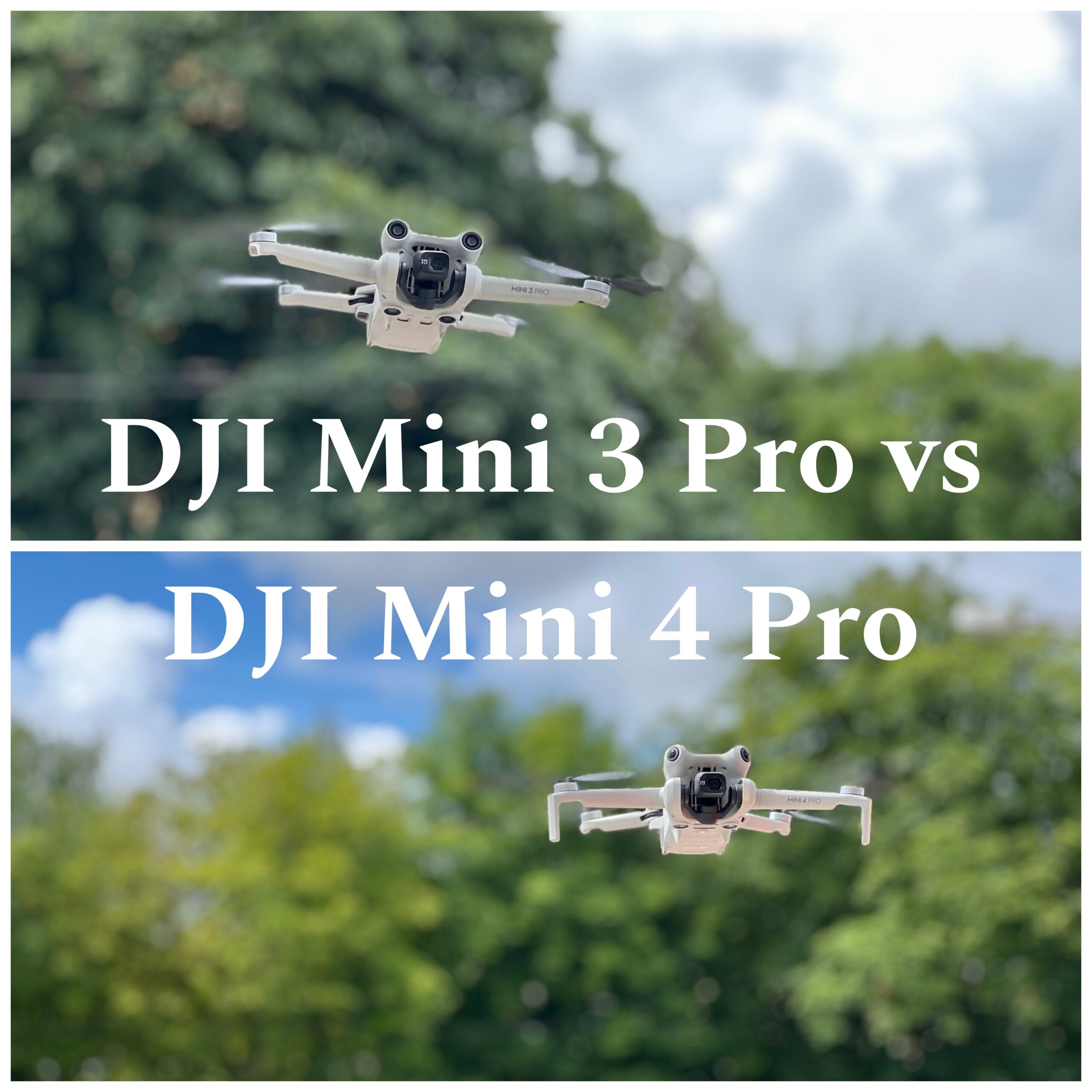
This time it’s DJI Mini 4 Pro versus DJI Mini 3 Pro. Although at first glance both mini drones, weighing less than 249 grams, seem quite similar, there are a number of important differences in their specifications. Which is the better choice? Is the difference just down to price?
Design and parameters
The design of the DJI Mini 4 Pro and DJI Mini 3 Pro is very similar in general, but with some important differences. The Mini 4 Pro has landing feet that the Mini 3 Pro does not. This makes the Mini 4 Pro more stable, while the Mini 3 Pro is always a bit tilted as it only rests on the ground. This difference is immediately apparent when landing on uneven surfaces.
Both drones weigh 249 grams. The DJI Mini 4 Pro measures 148 × 94 × 64mm when folded and 298 × 373 × 101 mm when unfolded. The Mini 3 Pro is slightly smaller at 145 × 90 × 62mm when folded and 251 × 362 × 70mm when unfolded. Maximum speed and flight time are the same for both models – 57.6 kilometres per hour and 34 minutes respectively.
Camera and functionality
Both drones are equipped with a 1/1.3-inch CMOS sensor, but the Mini 4 Pro offers greater dynamic range and better night vision functionality thanks to its 10-bit colour encoding and more varied colour modes. The Mini 4 Pro can record at 4K resolution up to 100 frames per second, while the Mini 3 Pro is limited to 60 frames per second.
Resolution and frame rate
The DJI Mini 3 Pro allows you to film in 1080p at up to 120 frames per second (FPS). This means you can slow down your footage to a fifth of its original speed while maintaining high definition quality.
With the DJI Mini 4 Pro, you can film in 4K at up to 100 frames per second (FPS). This gives even more detail in slow motion shots, for example. The ability to film in 4K at high frame rates gives you more flexibility in post-production, allowing exceptionally smooth and sharp slow-motion effects.
Slow motion video is a great tool for capturing footage, and while both the DJI Mini 4 Pro and DJI Mini 3 Pro offer slow motion recording capabilities, there are a few differences worth noting and keeping in mind.
ActiveTrack
The DJI Mini 3 Pro is equipped with ActiveTrack 4.0, which offers three tracking modes:
ActiveTrack: This mode allows the drone to autonomously track moving objects, keeping them in frame even as their speed and direction change. This is ideal for capturing dynamic action scenes.
Spotlight: in this mode, the user can lock the drone onto an object while the drone flies autonomously, keeping the object in focus regardless of the drone’s movement. This is perfect for taking surveillance shots.
Point of Interest: In this mode, the user can select an object or subject around which the drone will orbit, capturing captivating circular shots.
DJI Mini 4 Pro introduces the new ActiveTrack 360° feature, an enhanced version of the previous ActiveTrack 4.0. With ActiveTrack 360°, the drone can track objects and simultaneously avoid obstacles in all directions.
It’s ideal for taking shots in complex environments. While both drones offer ActiveTrack modes, the DJI Mini 4 Pro takes tracking to a new level with ActiveTrack 360°. This allows the drone to track objects from any angle. If you need advanced tracking capabilities for your aerial shots, the Mini 4 Pro is a great choice.
DJI Mini 4 Pro vs DJI Mini 3 Pro technical specs
| Function | DJI Mini 4 Pro | DJI Mini 3 Pro |
| Take-off weight | < 249 g | < 249 g |
| Measurements | Total packed: 148×90×62 mm. Unpacked: 251×362×72 mm | Total packed: 148×90×62 mm. Unpacked: 251×362×72 mm |
| Max flight time | 34 minutes | 34 minutes |
| Max wind resistance | 10.7 m/s (Level 5) | 10.7 m/s (Level 5) |
| Global Navigation Satellite System | GPS + Galileo + BeiDou | GPS + Galileo + BeiDou |
| Image sensor | 1/1.3-inch CMOS, Effective pixels: 48 MP | 1/1.3-inch CMOS, Effective pixels: 48 MP |
| Max photo resolution | 8064×6048 (48 MP) | 8064×6048 (48 MP) |
| Max video resolution | 4K @ 100fps + FHD | 4K @ 60fps + FHD |
| Obstacle avoidance system | Obstacle detection in all directions | Front, rear and lower vision sensors |
| Video transmission protocol | DJI O4 | DJI O3 |
| Advanced features | ActiveTrack 5.0, MasterShots, Advanced Return to Home | ActiveTrack 4.0, MasterShots |
| Maximum speed | 57.6 km/h | 57.6 km/h |
| Internal memory (both support Micro-SD) | 2GB | 1.2GB |
| Colour modes | Normal, HLG/D-Log M 10-bit | Normal/D-Cinelike |
| Quality of the real-time view | 1080p/60fps | 1080p/30fps |
| Max transmission distance | 10 km | 8 km |
| Control panel | DJI RC-N2 (DJI RC 2) | DJI RC-N1 (DJI RC) |
How to choose?
First, work out what your expectations and needs are, and based on that, which model suits you best. Then choose a controller and decide whether a single battery is enough or whether a set with several batteries and several accessories would be suitable. That way, you’ll find the perfect drone kit that’s likely to serve you for years to come.
Price is often the main factor influencing the decision to choose a product. If the budget does not allow for even a small extra cost, the choice is clear. Consideration should also be given to the drone’s class markings and weight, but the drones compared in this post both weigh 249 grams, meaning that both can be flown equally well without most regulatory requirements. However, if there is room to stretch the budget, the DJI Mini 4 Pro may be a better choice – the Mini 4 Pro is still a step up from its predecessor and offers some improvements such as a better obstacle detection system. The cheapest Mini 4 Pro kit is priced at €799, while the cheapest Mini 3 Pro kit, which is mostly sold out, costs €659. However, if you’re still in doubt between the two, feel free to ask for advice at our store at Villardi 22, Tallinn (Mon-Fri 10-18, Sat 10-15) or email info@droon.ee.
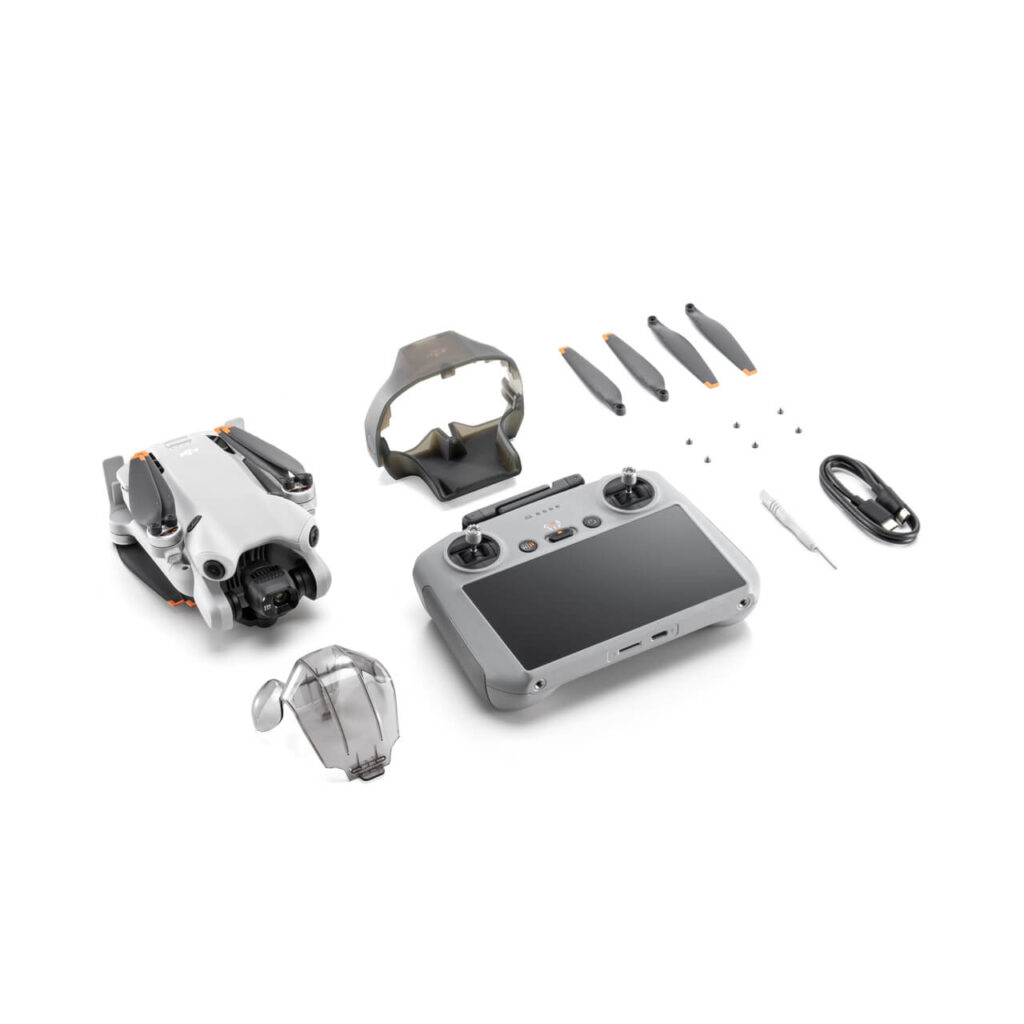
DJI Mini 4 Pro (DJI RC 2)
DJI Mini 4 Pro is a compact, ultra-lightweight drone designed for creators who demand professional image quality without compromising portability.
Weighing under 249 grams, it combines a powerful 48 MP camera with a 1/1.3-inch CMOS sensor, 4K HDR video recording, omnidirectional obstacle sensing, and intelligent flight features, making it suitable for both beginners and experienced pilots.
ActiveTrack 360°, True Vertical Shooting, and DJI O4 digital video transmission allow you to capture smooth, cinematic footage for social media, travel, outdoor adventures, and professional content creation.
With impressive flight performance, advanced safety systems, and exceptional ease of use, DJI Mini 4 Pro delivers flagship-level capabilities in an incredibly compact package.
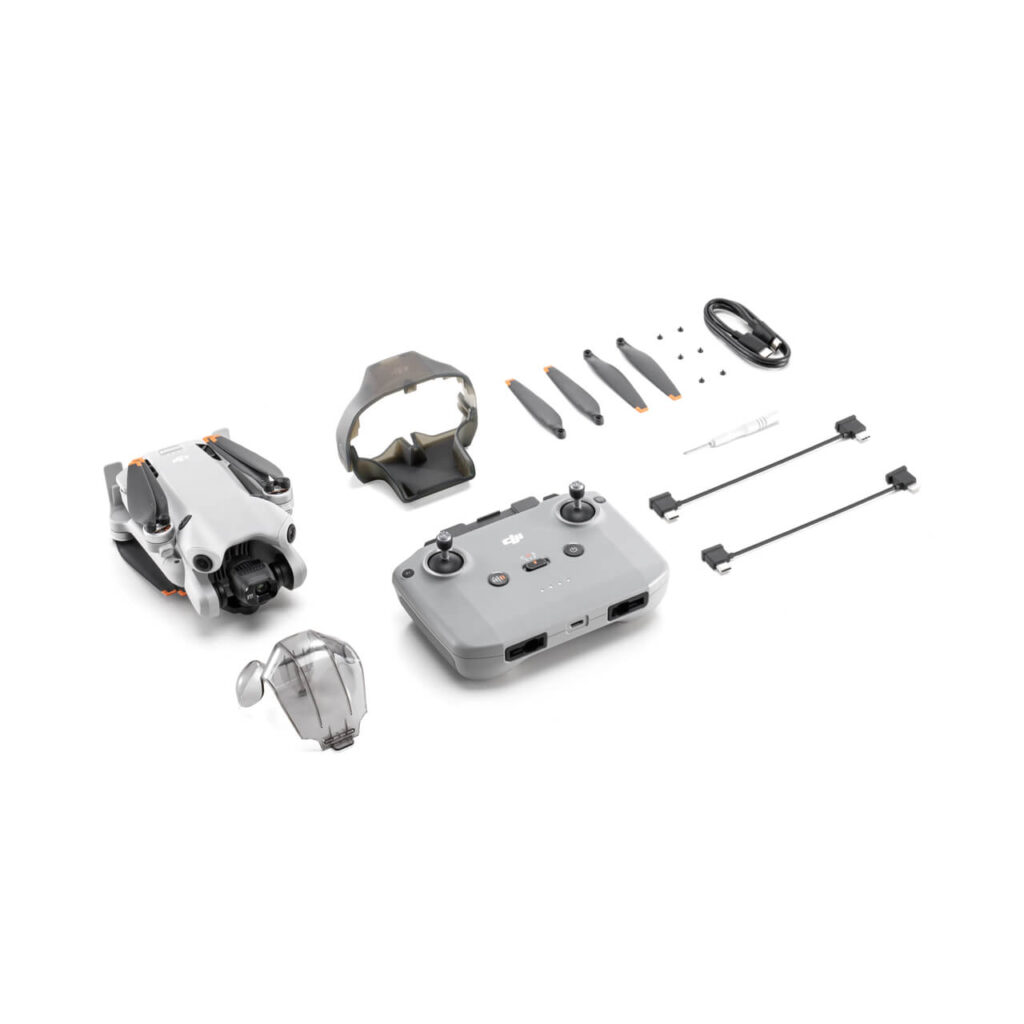
DJI Mini 4 Pro (DJI RC-N2)
- Weighs less than 249 g
- 4K/60fps HDR Vertical recording
- Obstacle avoidance sensors in all directions
- Long battery life
- ActiveTrack 360º
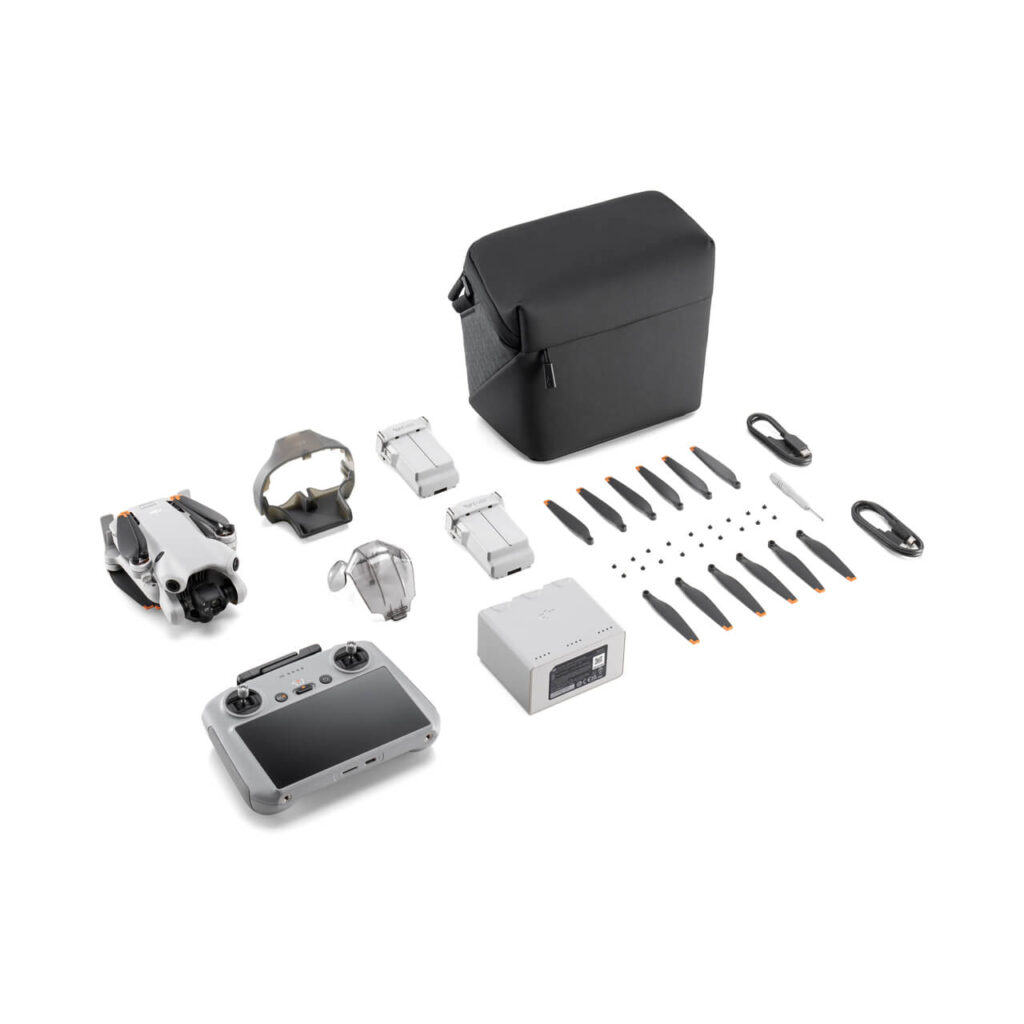
DJI Mini 4 Pro Fly More Combo (DJI RC 2)
- Weighs less than 249 g
- 4K/60fps HDR Vertical recording
- Obstacle avoidance sensors in all directions
- Long battery life
- ActiveTrack 360º